Bocas Del Toro, Panama
Bocas Del Toro, our port for the day is an archipelago in the northern part of Panama. The province has a small capital referred to as Bocas Town where cruise ship tenders drop passengers off for excursions on the different islands in the archipelago. Bocas Town has brightly colored houses and I believe is the only place in the archipelago with roads navigable by car. For excursions you need to travel to the other islands.
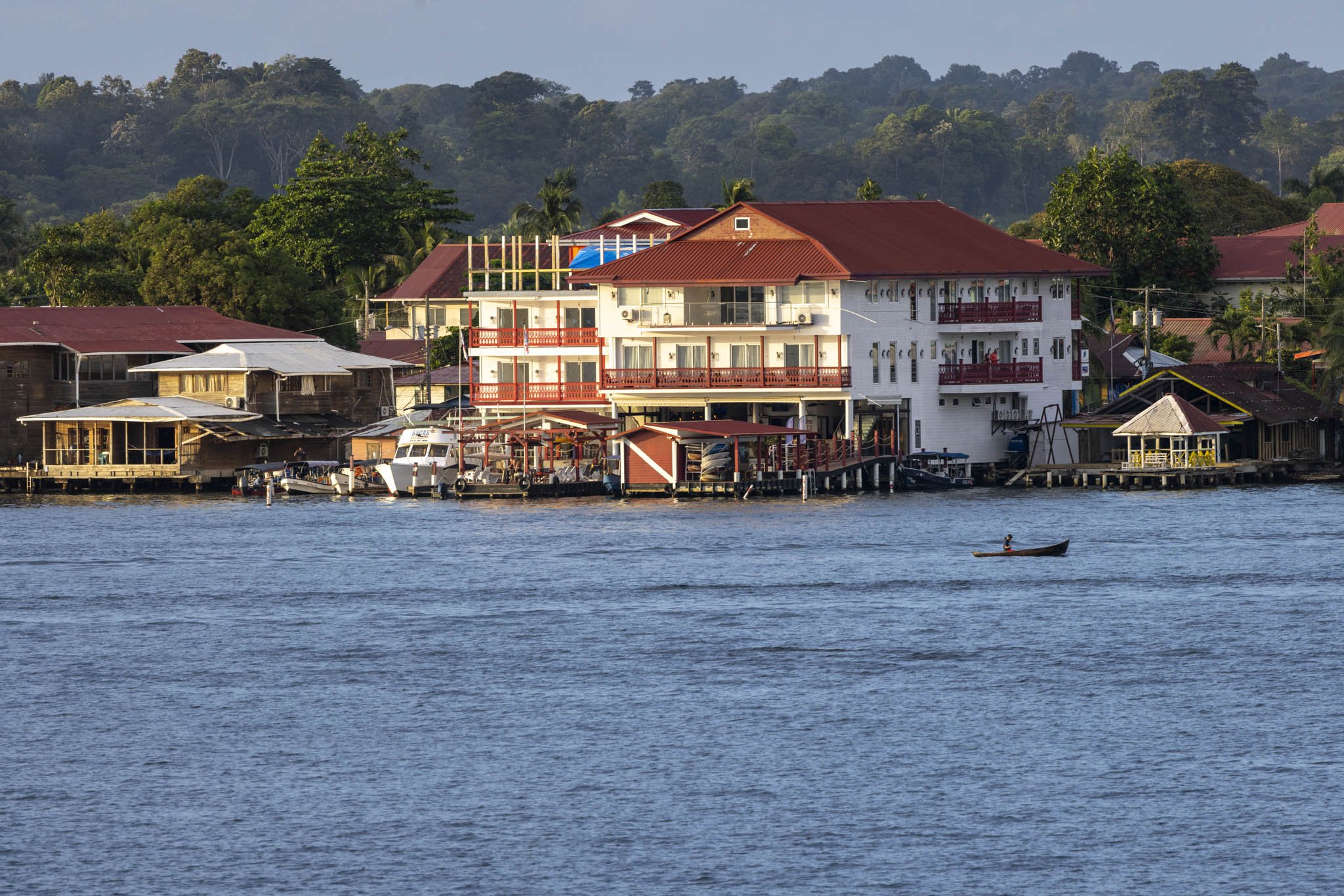
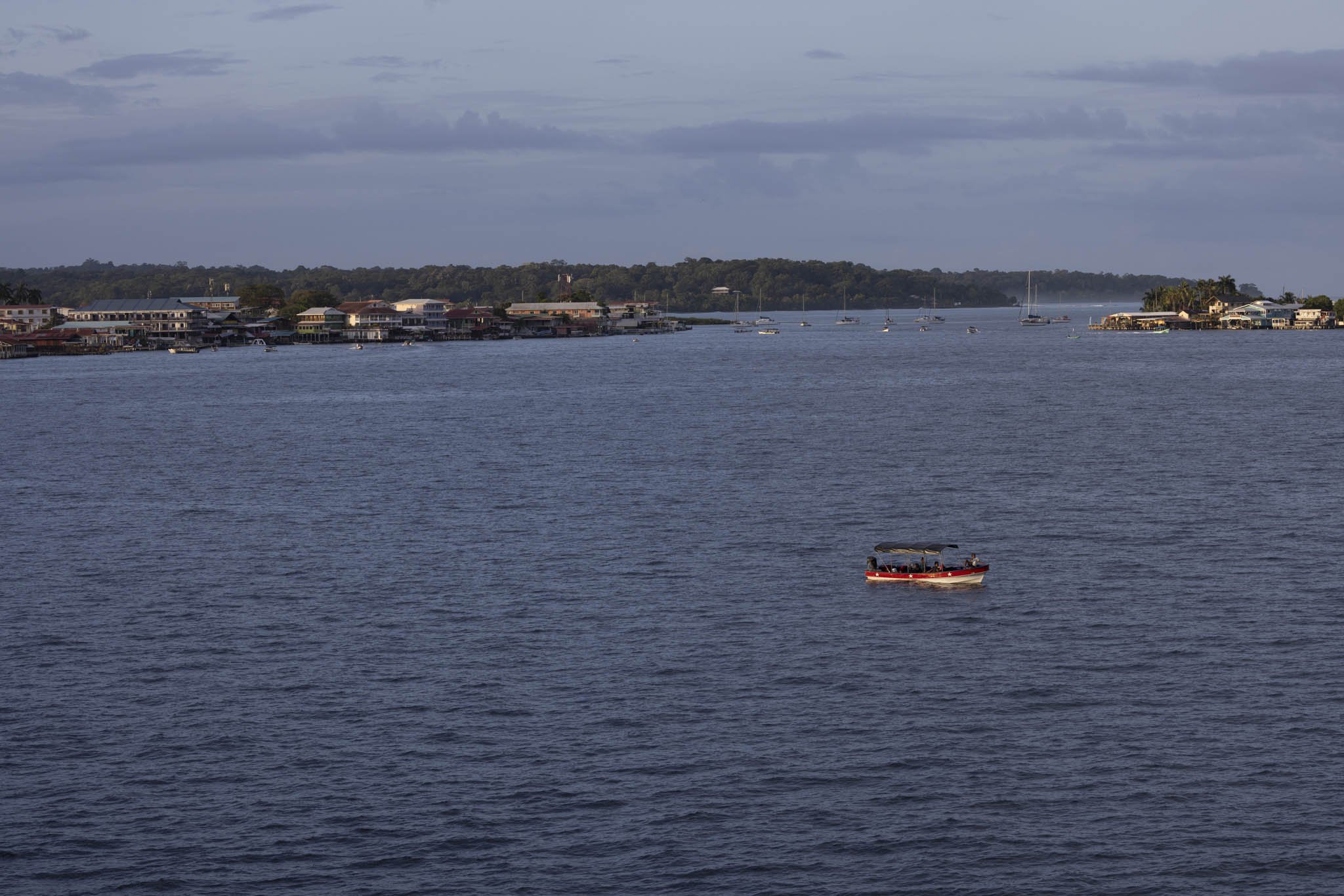
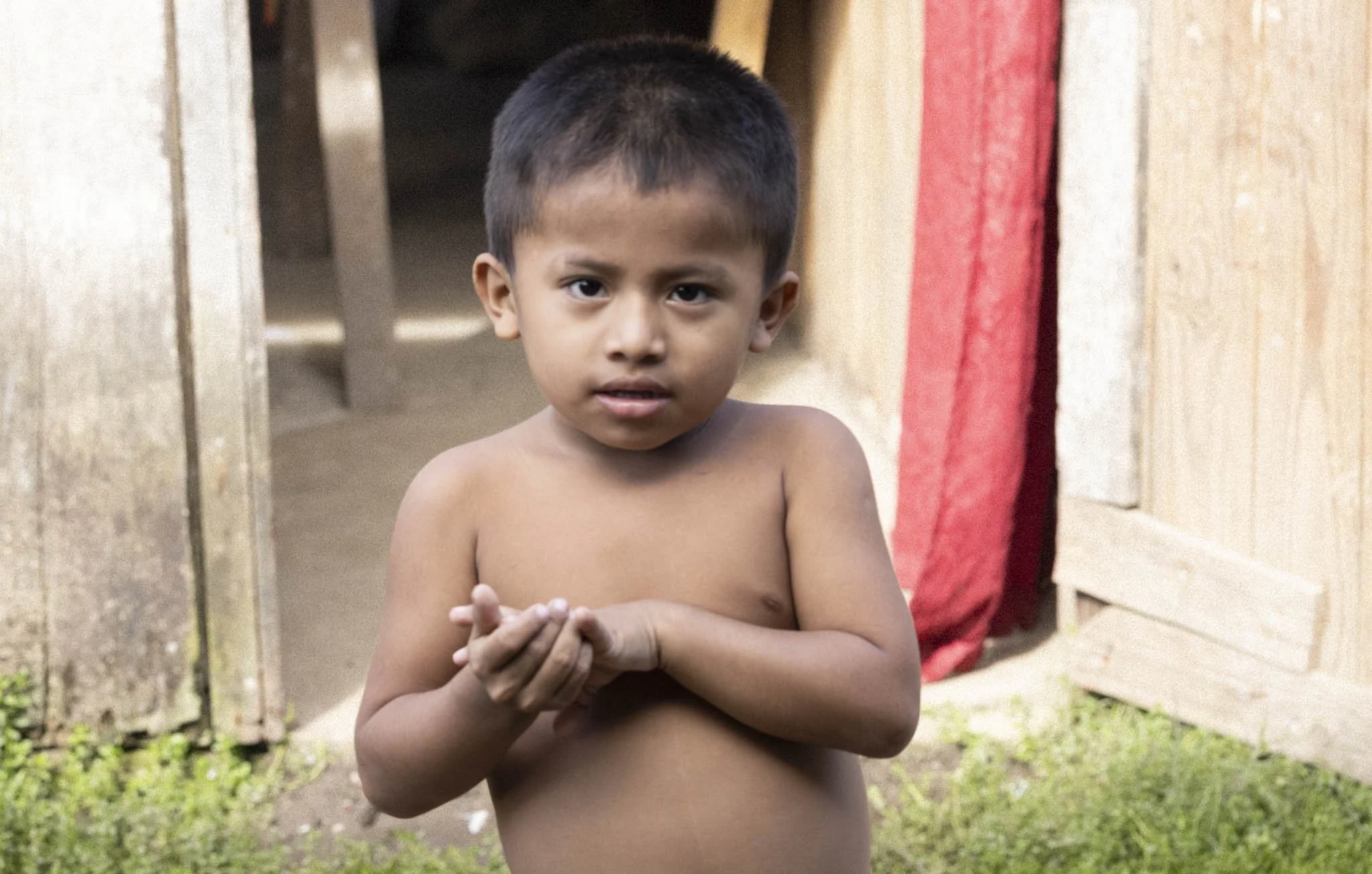
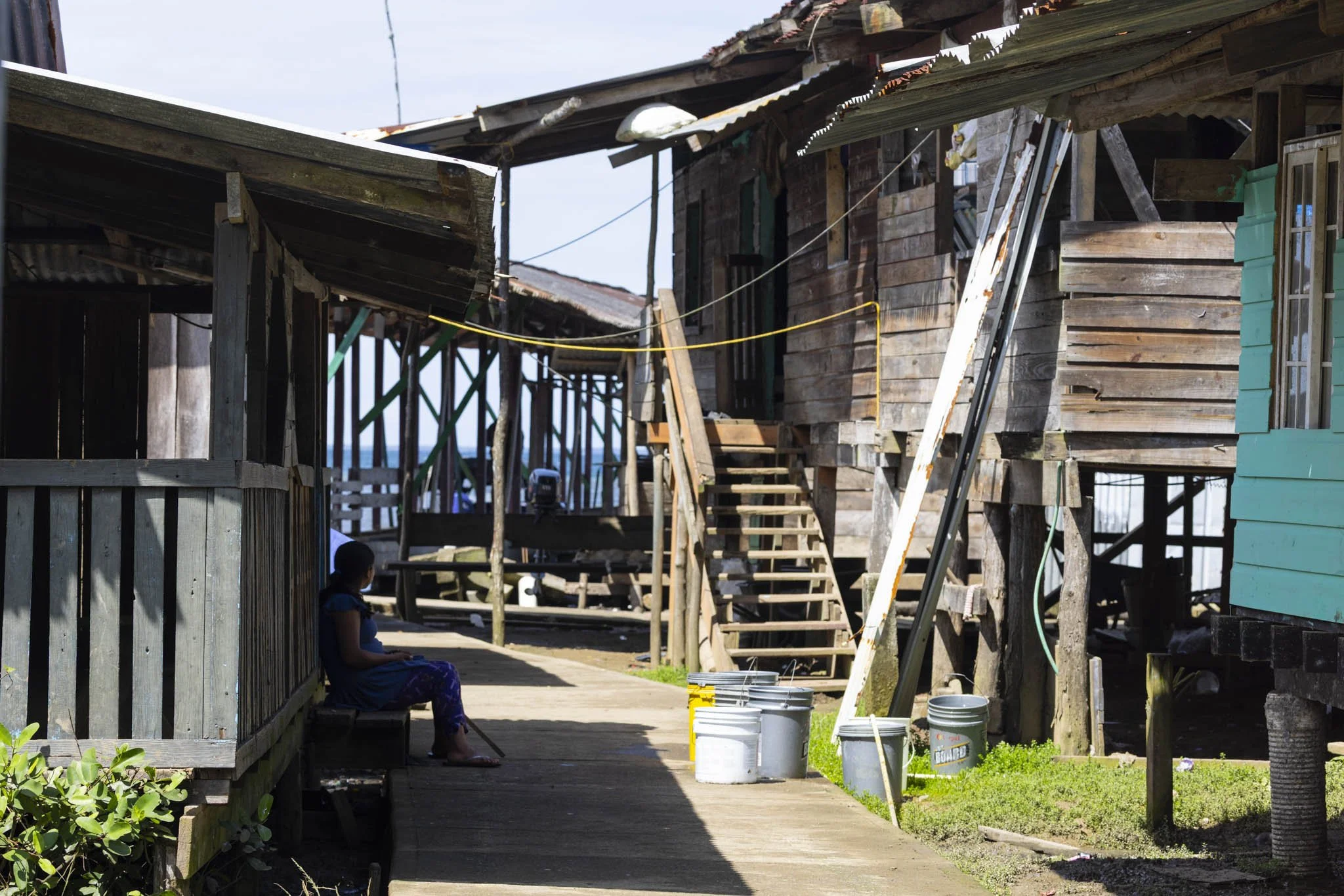
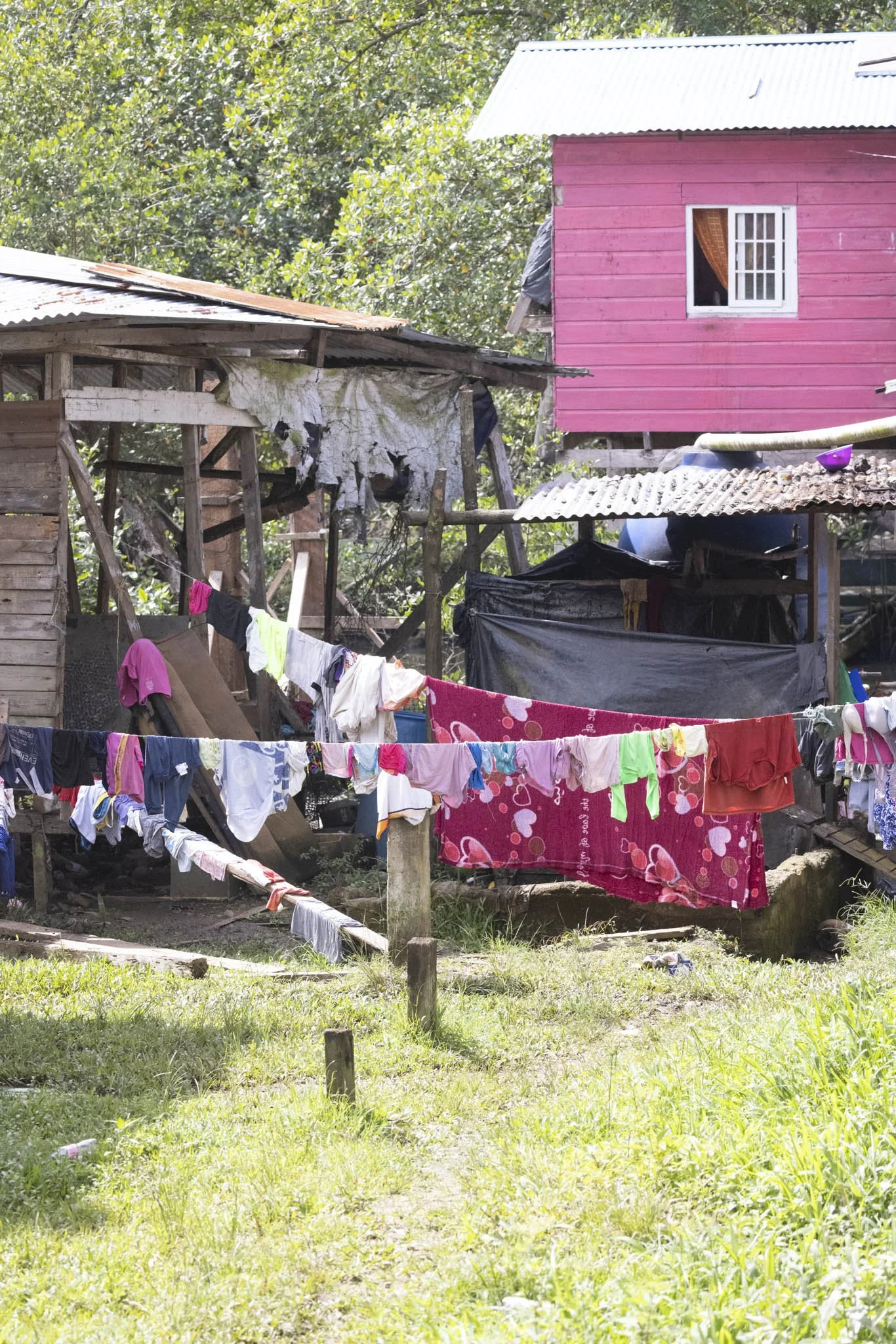
Many of the inhabitants of the islands are indigenous and most live in poverty. Homes are poorly constructed, and lack running water and electricity. Our wonderful excursion, called Rainforest Chemistry: Medicinal Plants & Natural Dyes was to a small village in San Cristobal inhabited by the Ngabe tribe. It sounded interesting but we didn’t know what to expect. Our group of 10 met our guide, Mathilde at the dock on Bocas Town then traveled in an old hard shell boat on some very bumpy seas for a 20 minute ride over to San Cristobal island. Navigating getting in and out of the boat was quite a challenge but there was always someone to help.
At the dock in San Cristobal we were greeted by Mary, the President of the village who we later learned has been the elected head of the village for 15 years and has been instrumental in bringing much needed health care to the village and in organizing a group of women who work together to use the resources around the village to improve the lives of the people who live there.
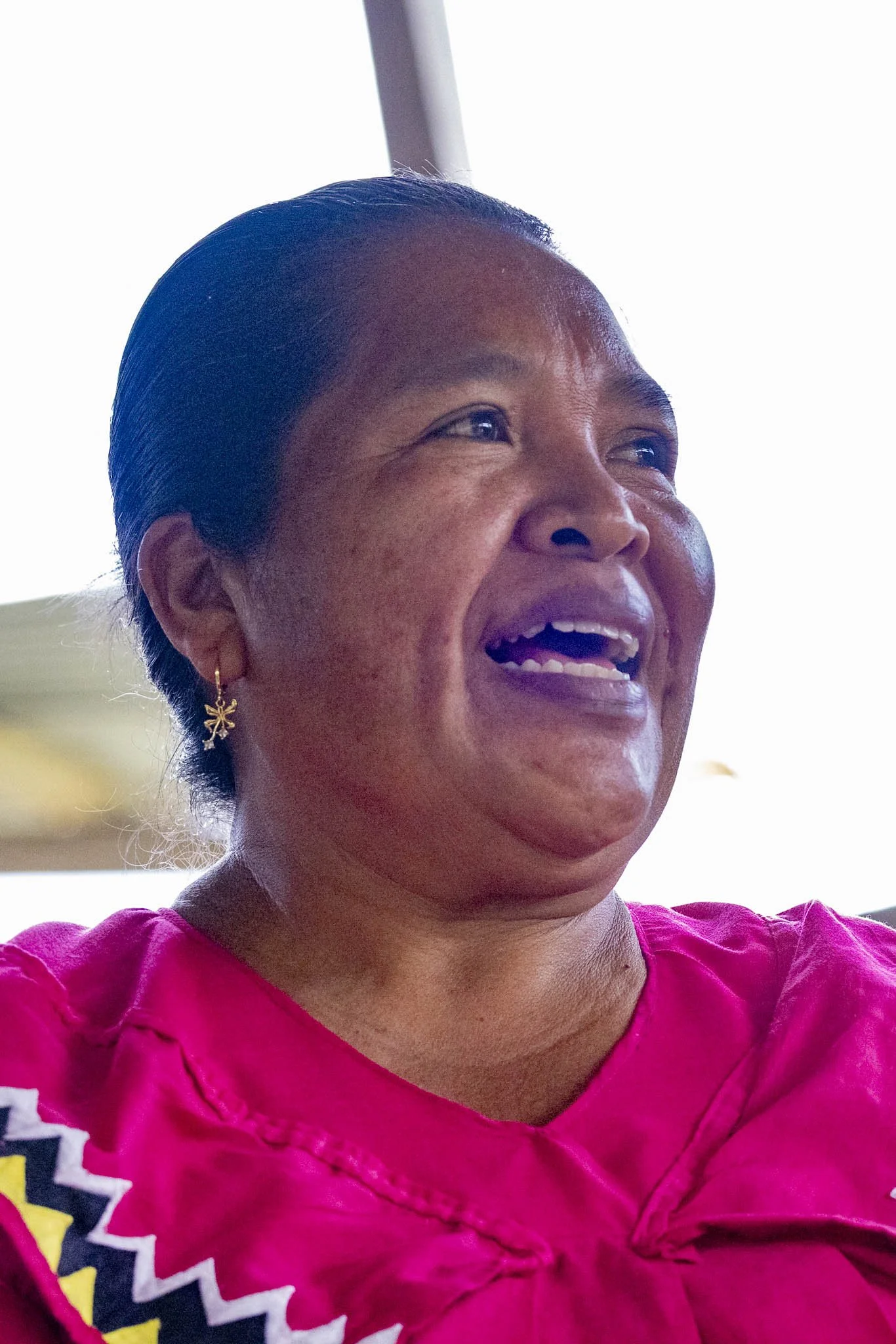
It was a short walk down to dock to our meeting place which is the center of Mary’s community of women. They were all dressed in colorful, hand made, native dresses. All of the women and their children were warm and friendly and happy to see everyone. They only spoke their native language or Spanish but despite the language barrier, and with a little help from Mathilde, everyone was able to share a little about themselves. We met the tribe healer, the midwife, the plant expert, the cooking experts, the fabric experts and finished craft experts
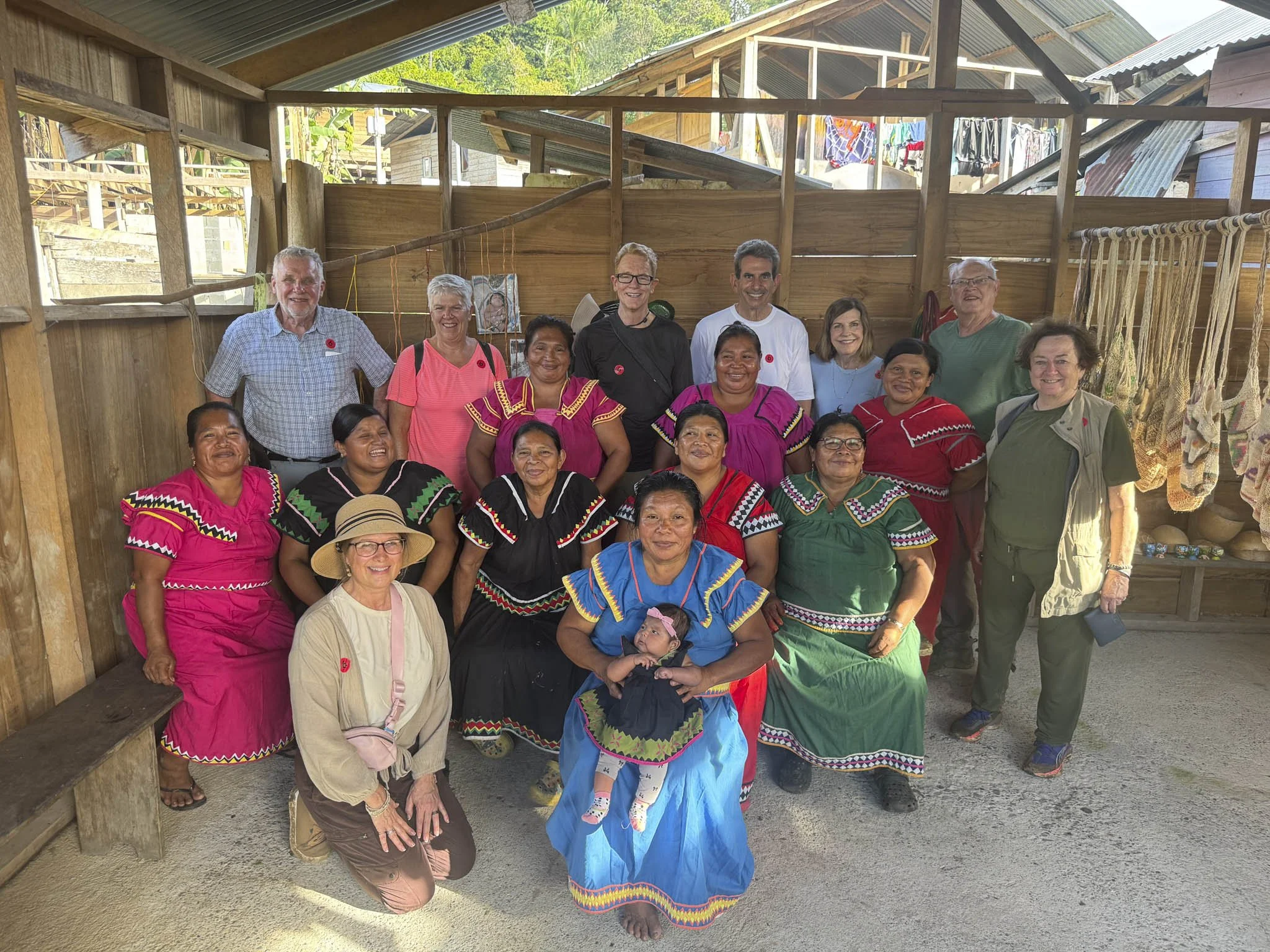
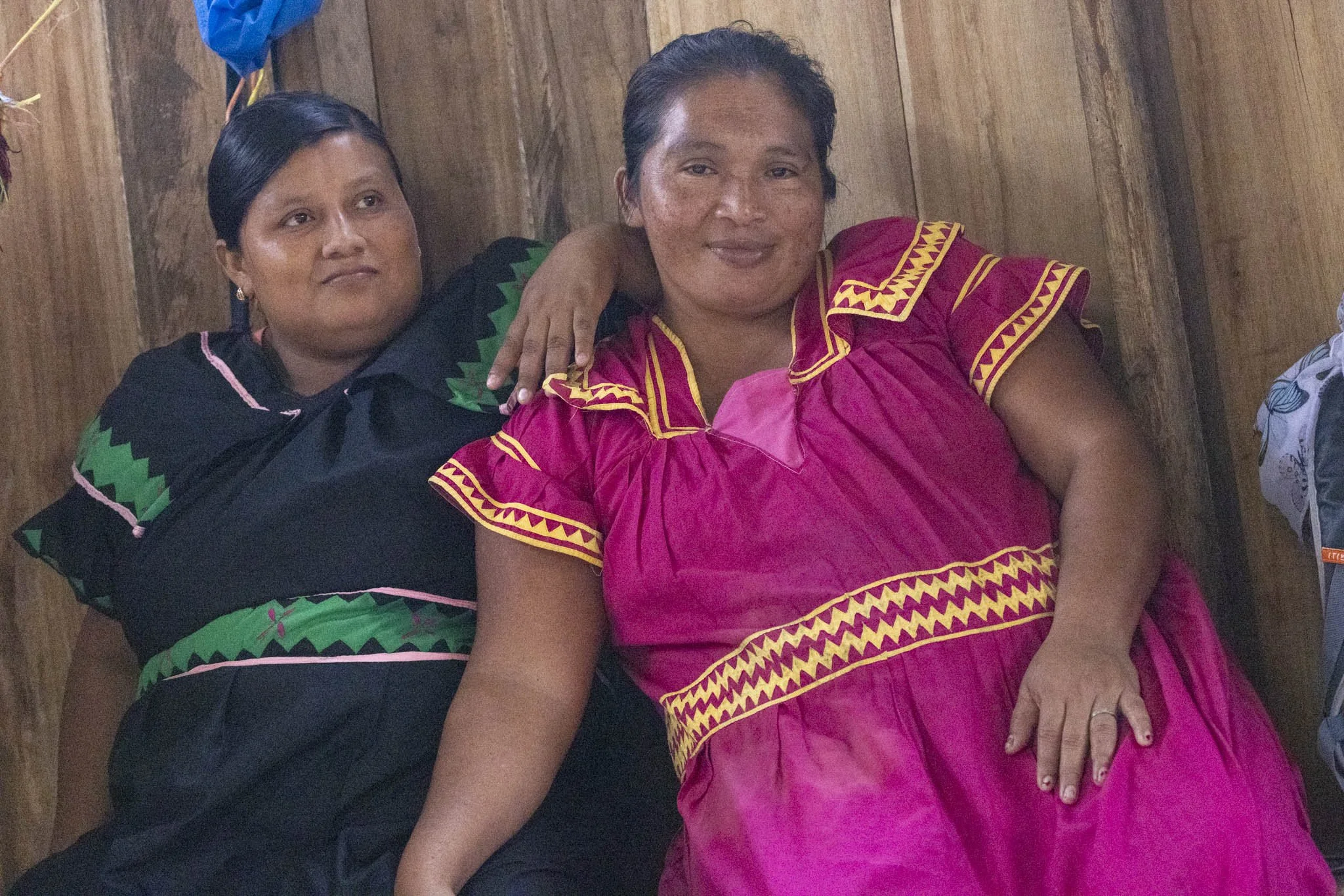
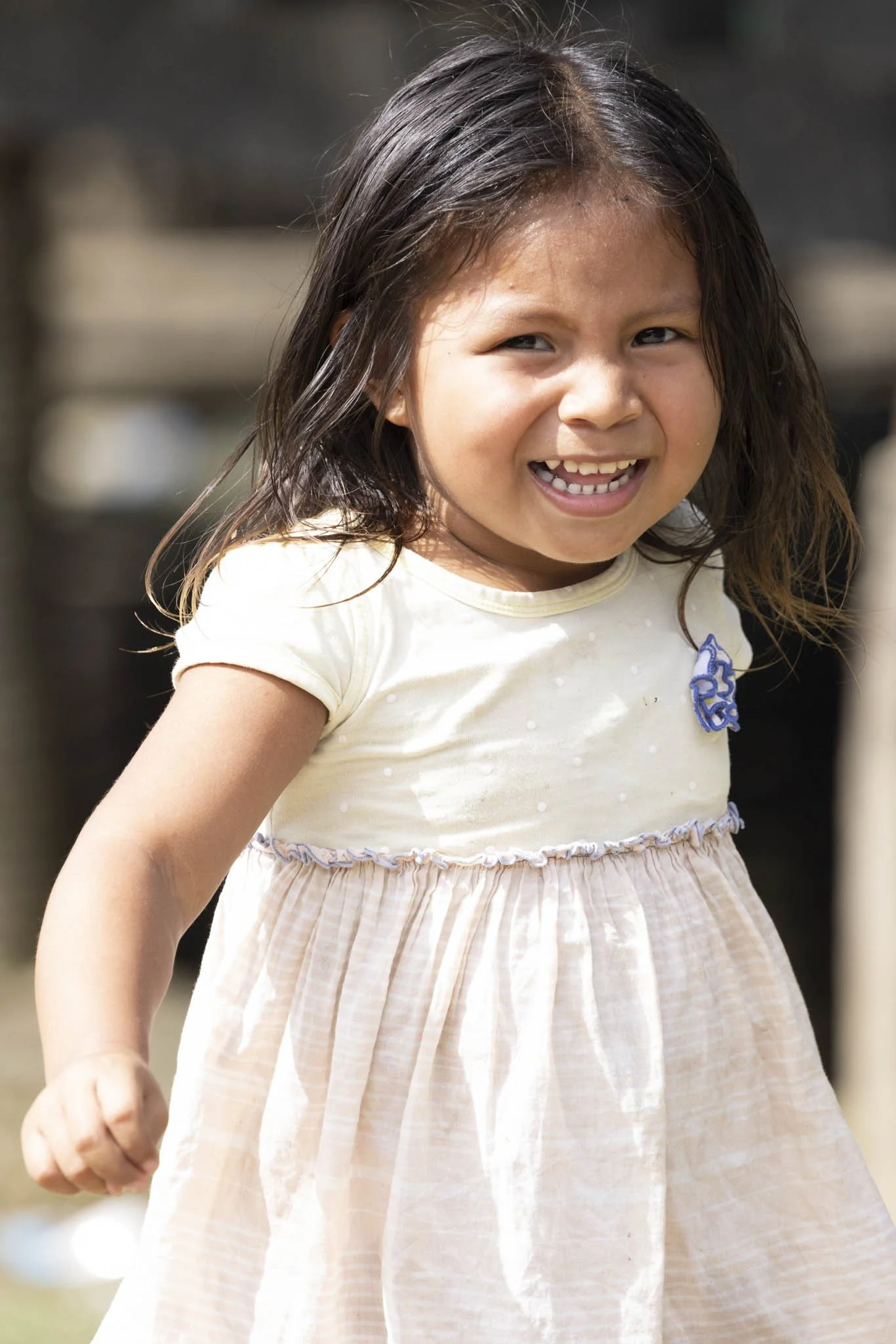
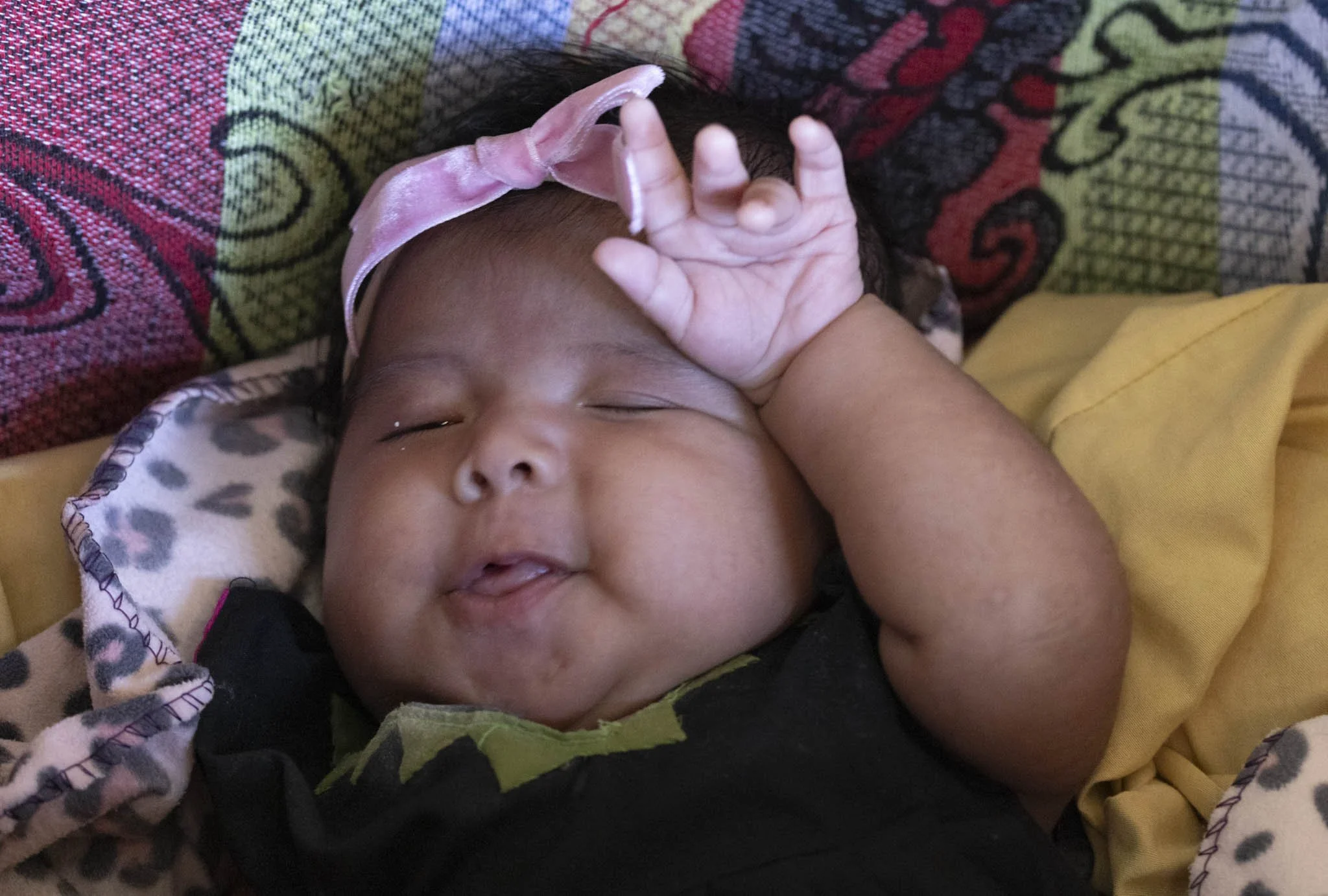
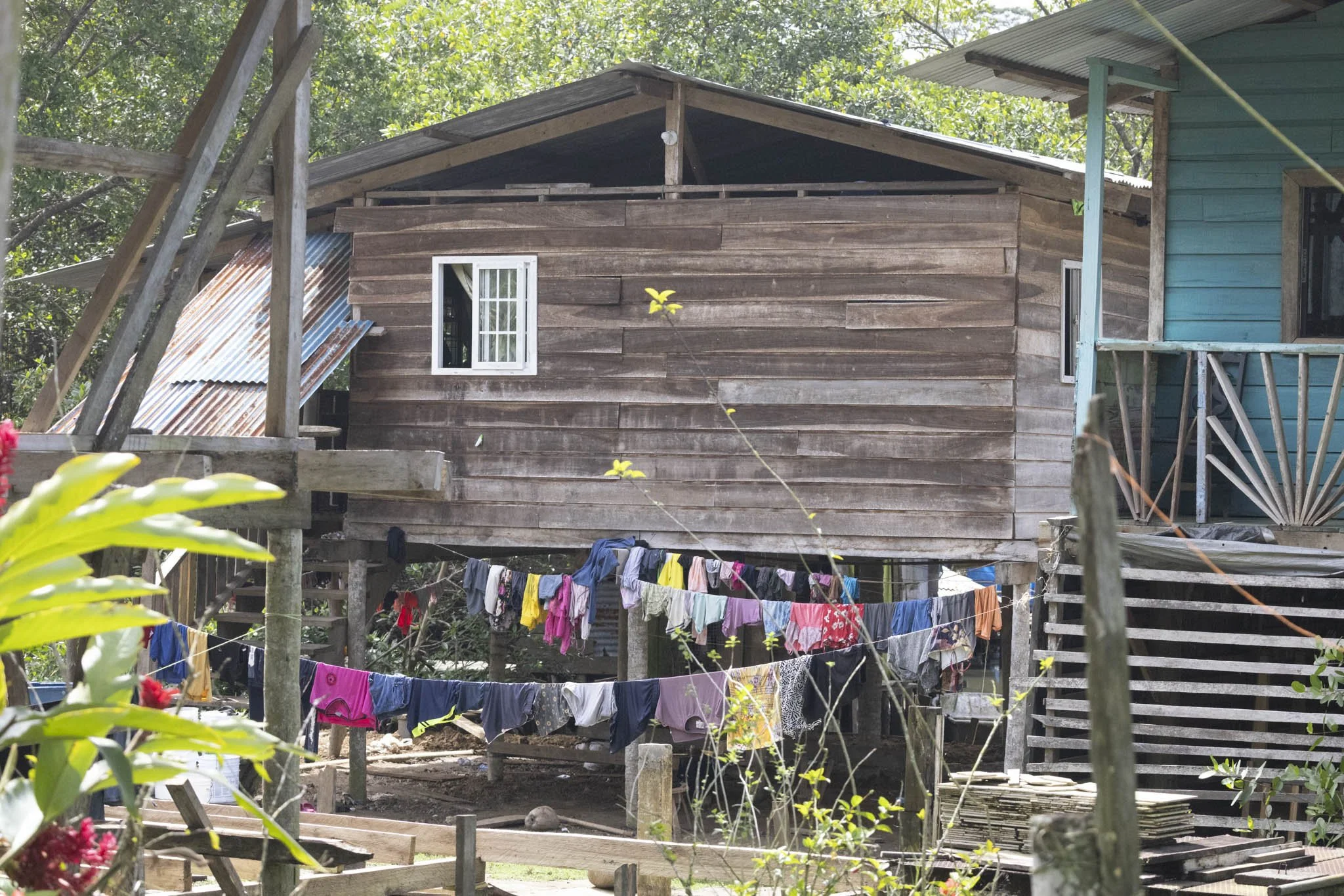
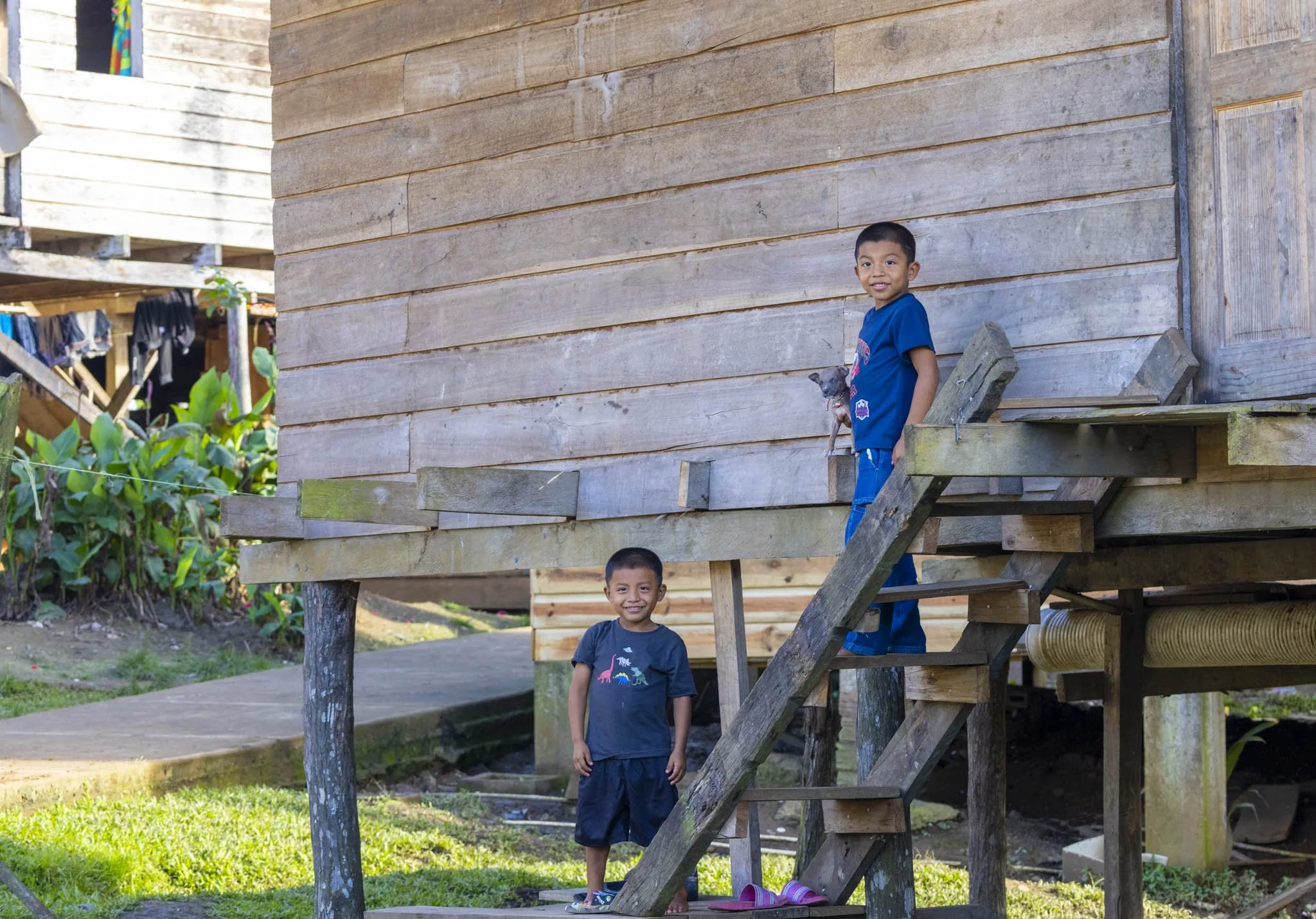
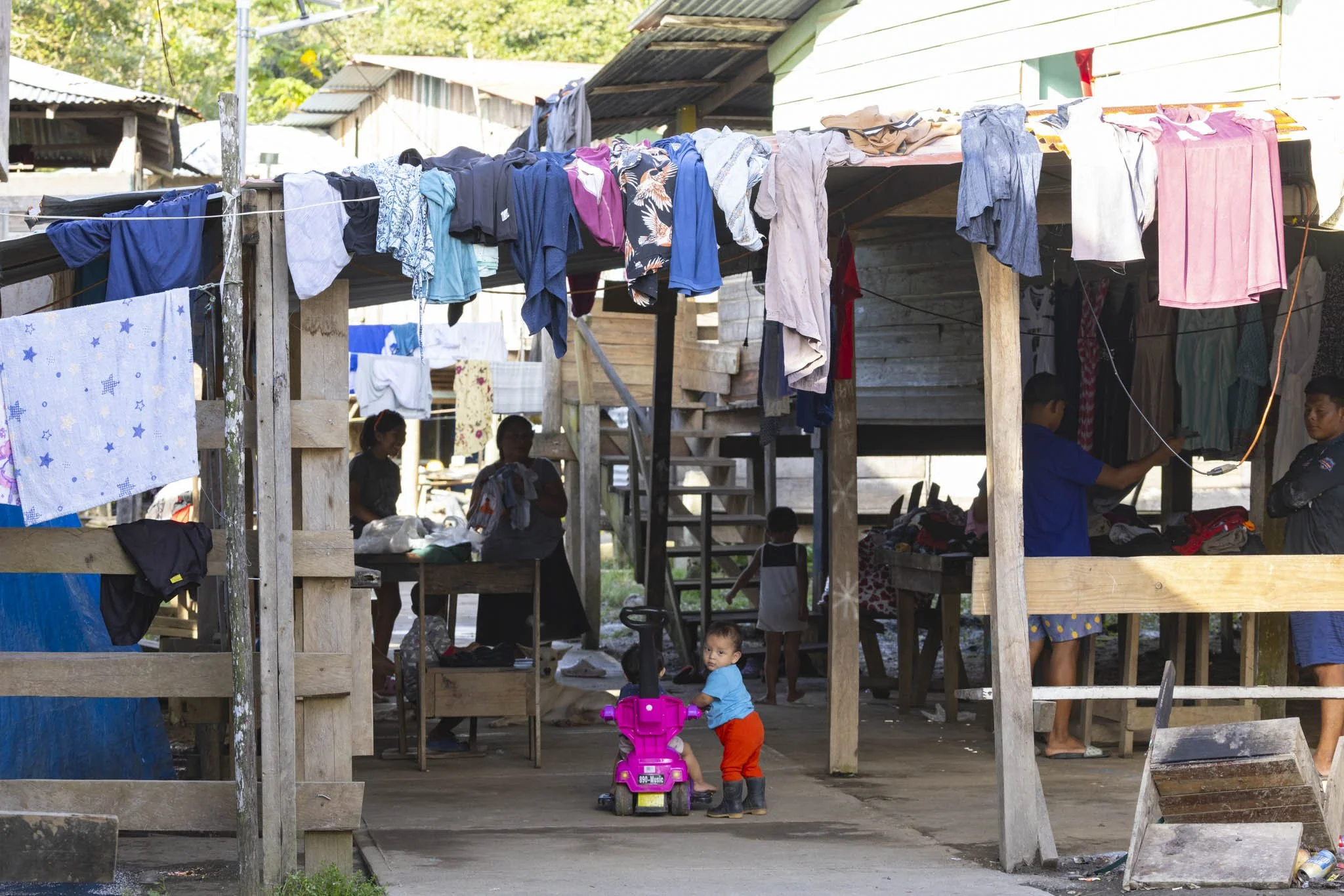
After our introductions, two of the women and Mathilde took us on a walk down a cement path through the town for our hike into the rainforest. All of the homes are built on stilts. Most have open air windows, no plumbing and only homes that can afford solar or a generator have electricity.
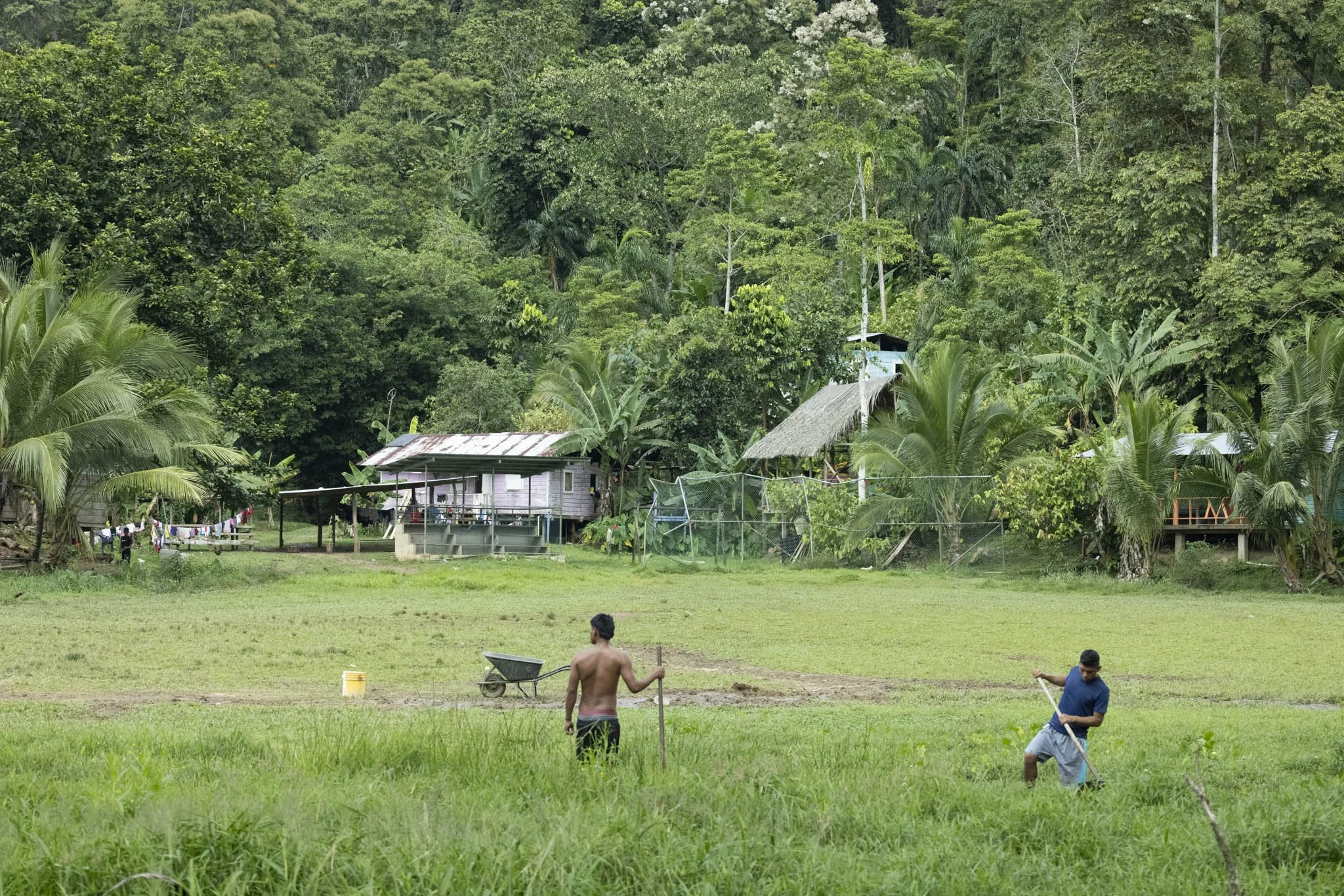
Just outside the town the path turned to dirt and then into very slippery mud as there had been a lot of much needed rain over the past few days. I was glad I took advantage of the offer for a walking stick or I most assuredly would have come back totally covered in mud instead of just mud up to my ankles.
The rainforest has been especially dry the past few years. The most recent drought has lasted for a number of months. Mathilde explained that the more frequent droughts are having a large impact on the local vegetation which the local people rely upon for food and medicine. Everywhere we have traveled around the world for the past 10 years we have heard from countless people, especially those involved with agriculture about the drastic negative effects climate change is having. This trip was definitely no exception.
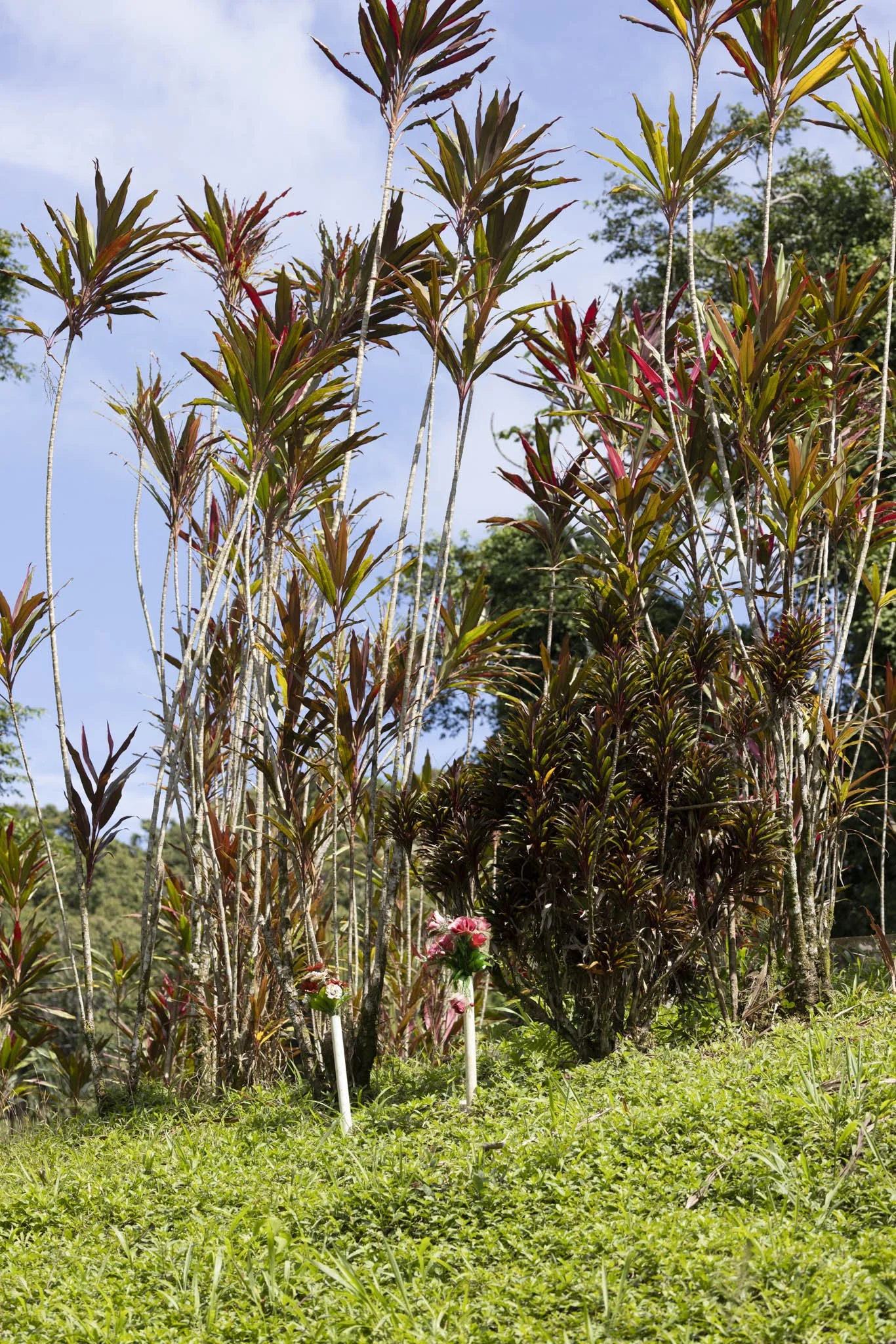
Our first stop on the path was at the village cemetery. The cemetery is located just outside the village on a few hills. We learned from Mathilde that when people die and are buried, a cordylon fuiticosa (a less sweet relative of the sugar cane) is planted over the grave. The Ngabe believe that the soul of a loved one lives on in the plant as a way to communicate with them. The stalks of the plant are also used medicinally by people on the island as a cure for intestinal problems.
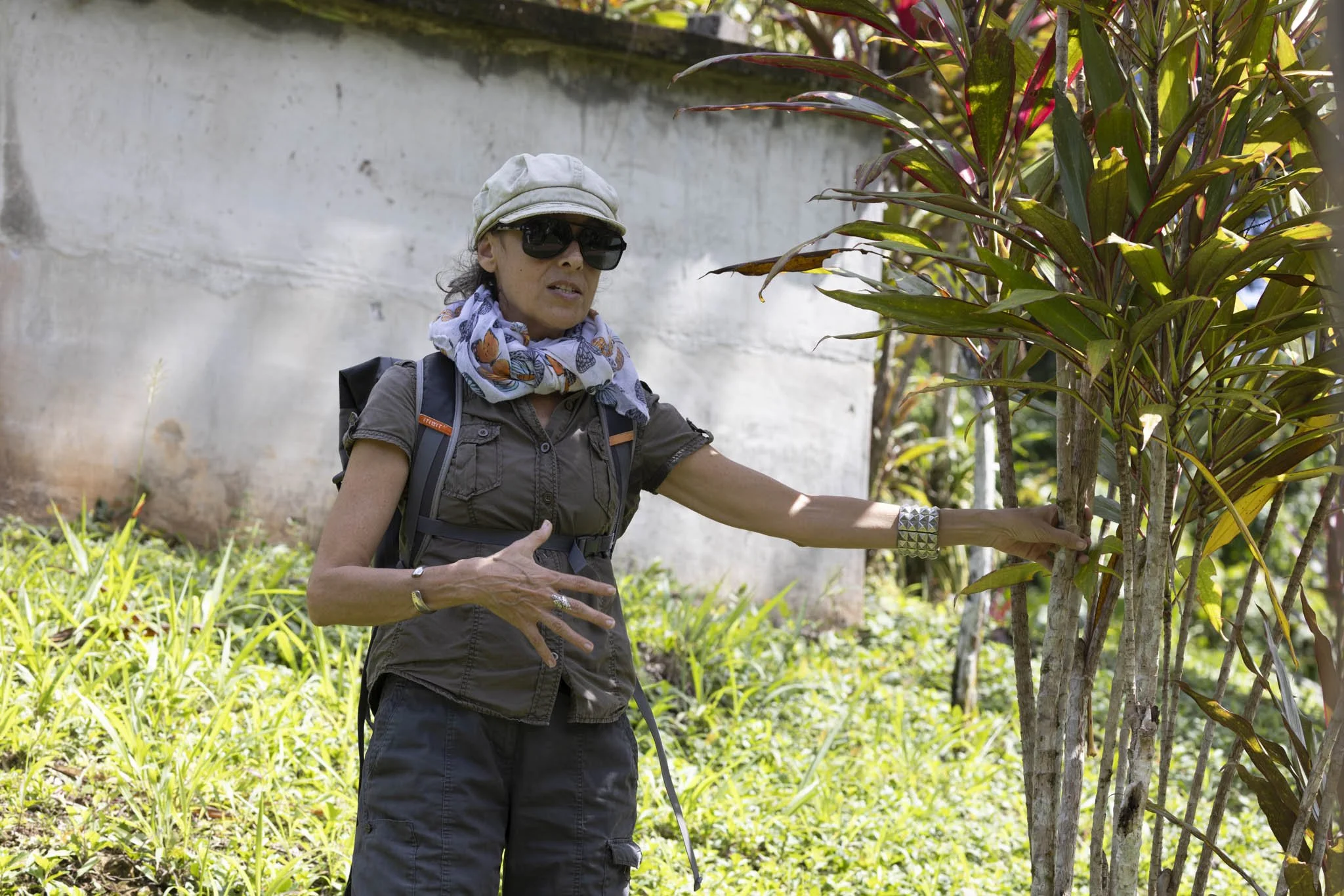
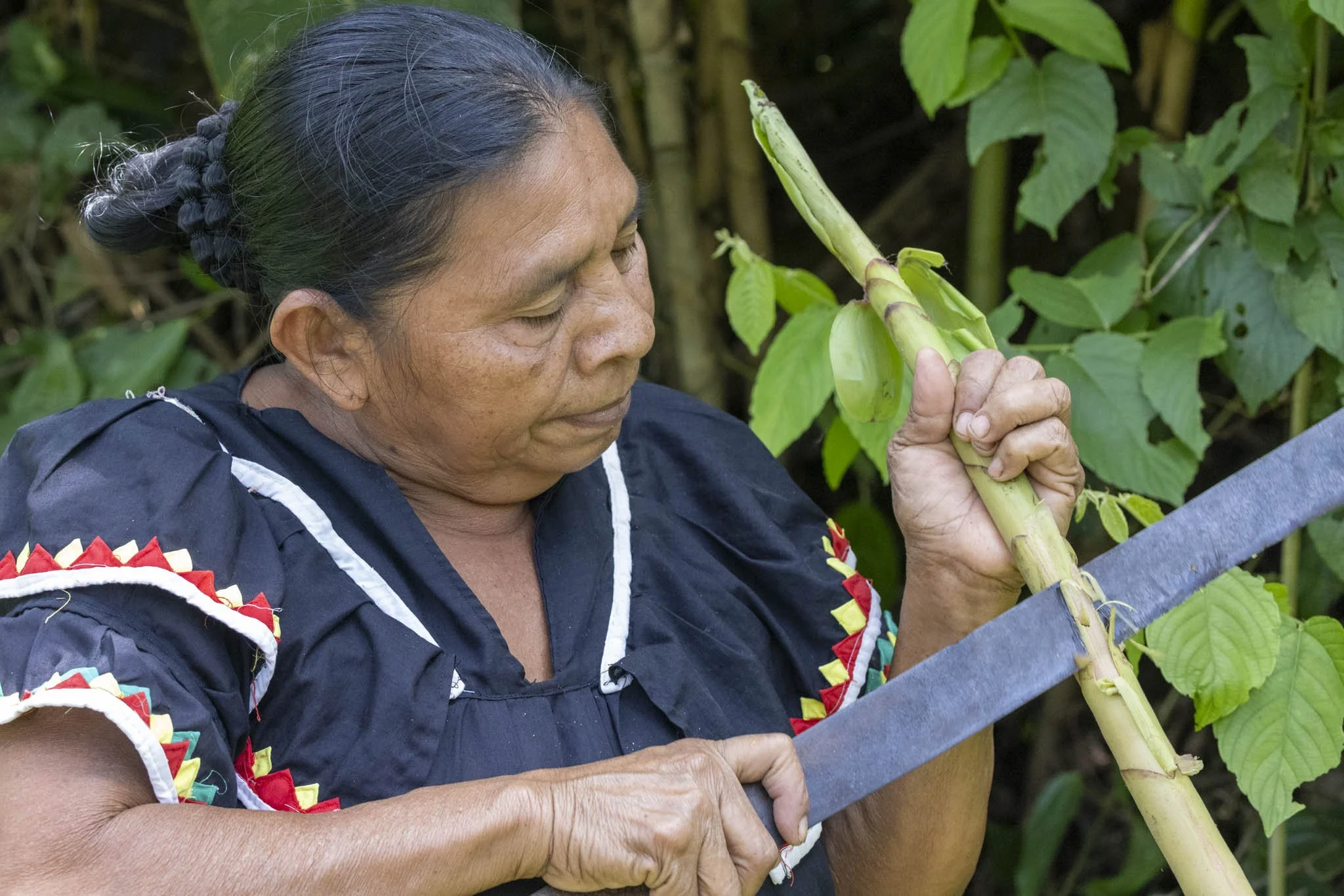
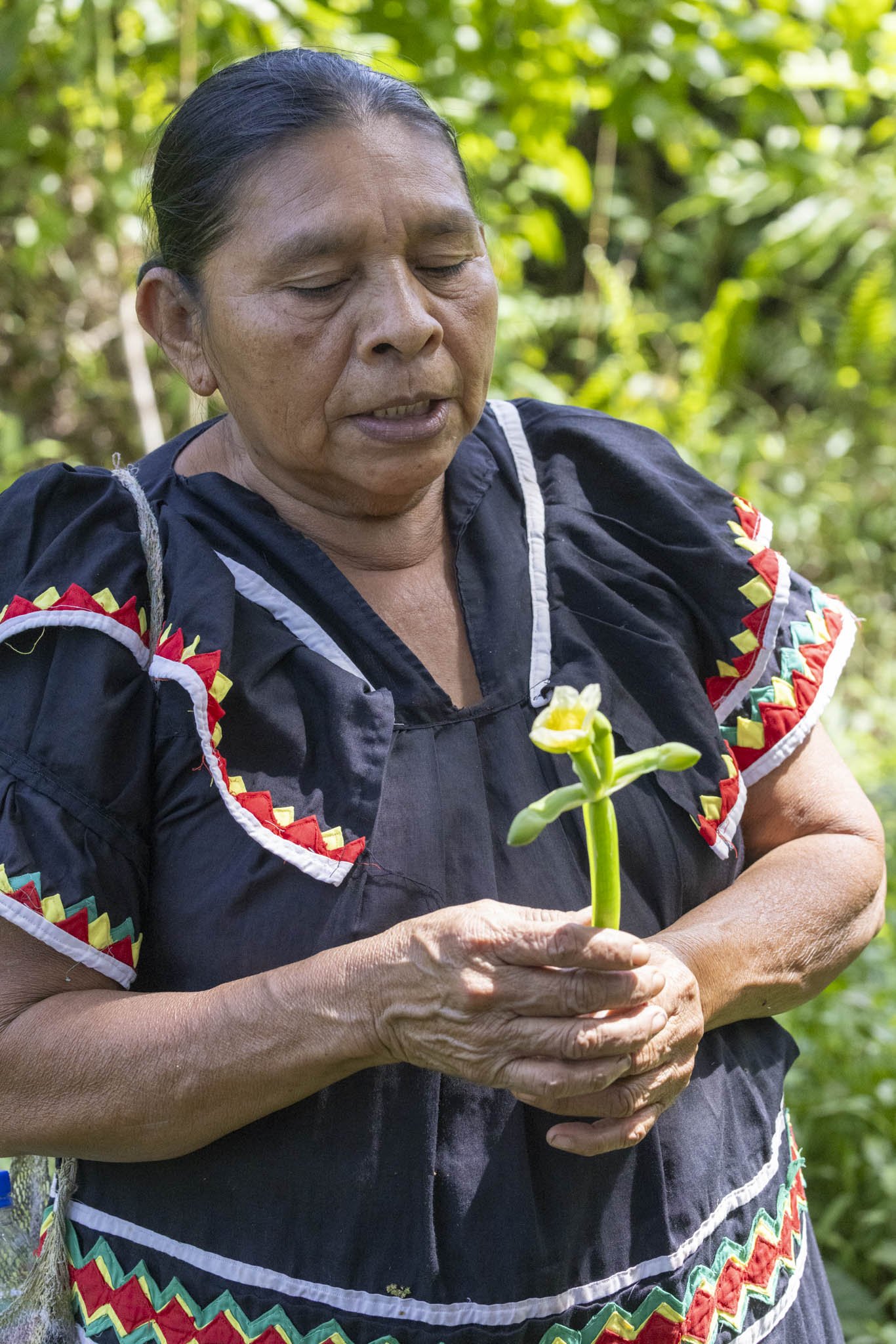
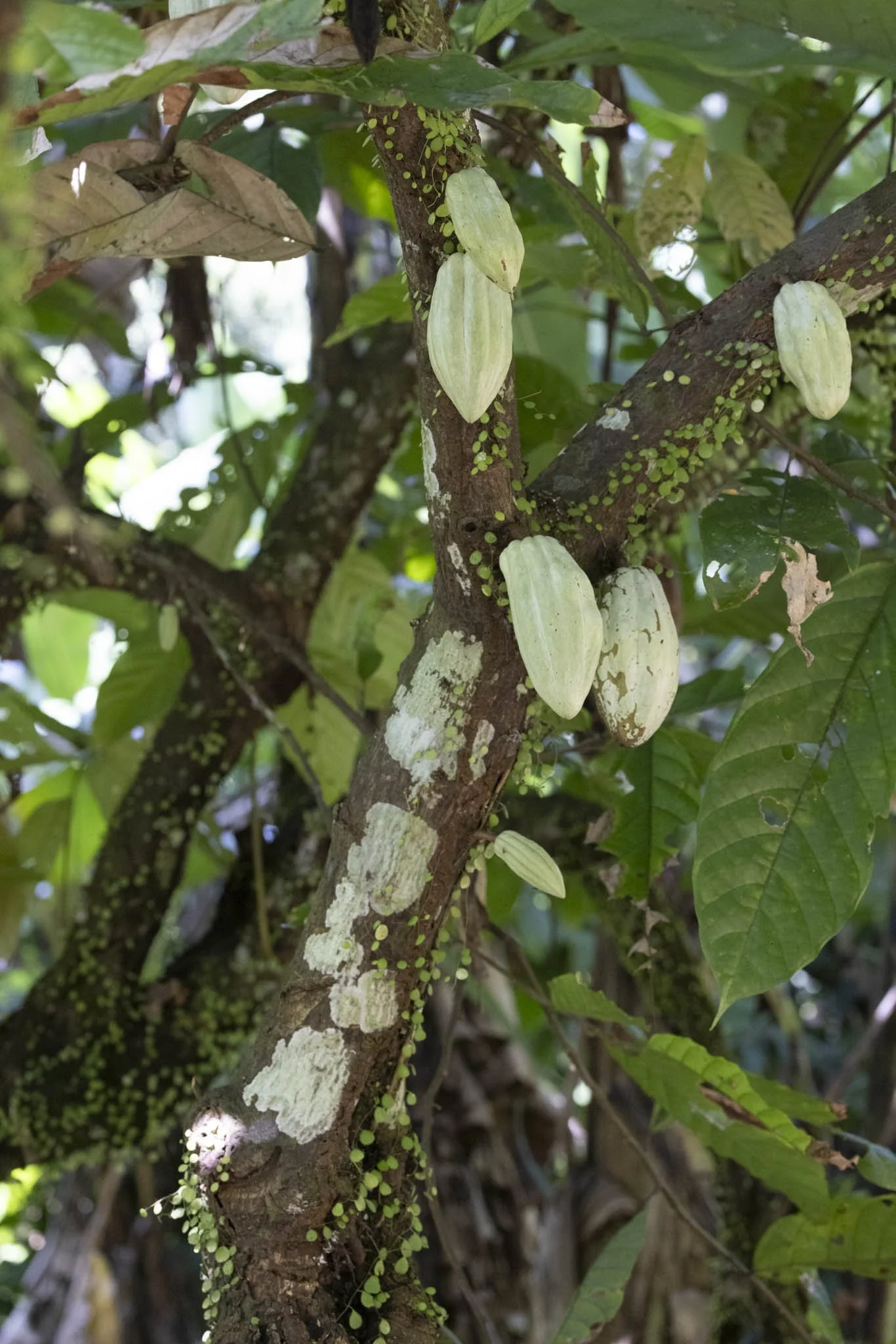
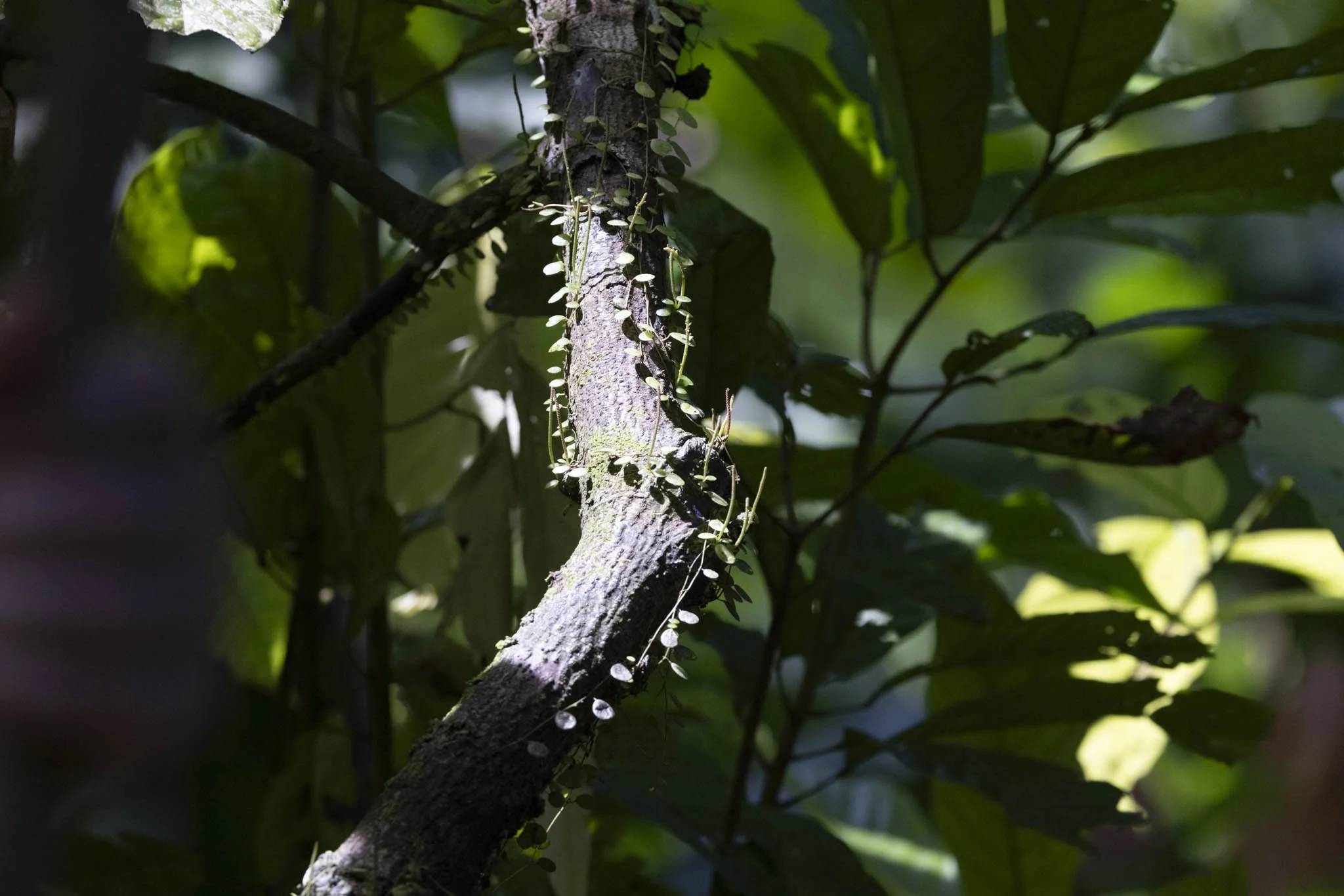
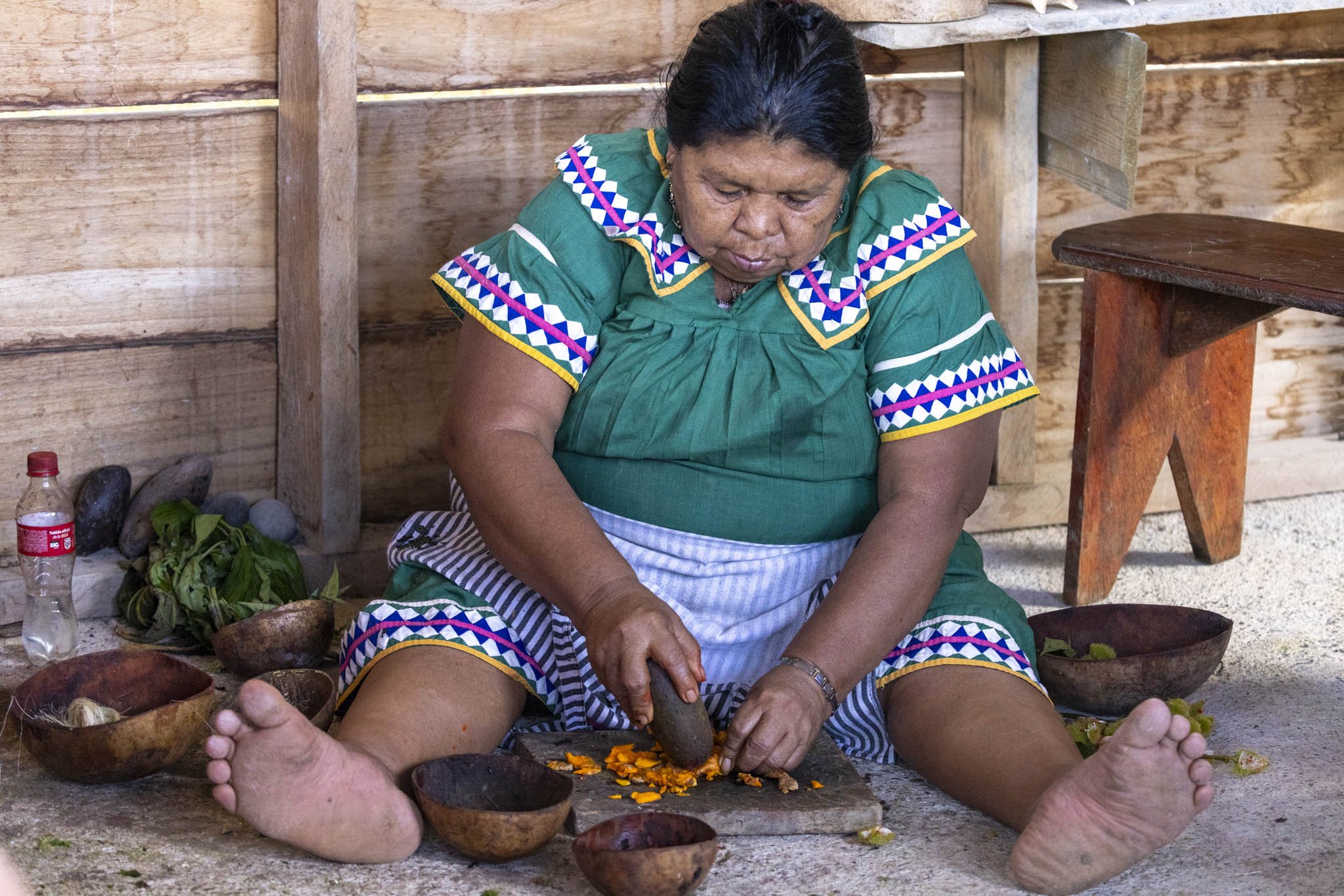
As we proceed though the path into the rainforest, the tribe’s healer and one of the other women showed how the plants are are harvested (these women ere pretty amazing in their use of a machete), and explained with Mathilde’s help how they are used medicinally, for food and for fabric dying. The most important crop on the island is cocoa beans and Mathilde encouraged us to look for cocoa products that are sourced by local growers with proceeds going to the growers. She indicated less that 2% of the cost of most chocolate goes back to these people who work tirelessly to produce their crops. Some of the other plants we got to see, touch and at times taste include another relative of the sugar cane which has medicinal uses and is used as a fixative for dyes, a type of agave that is used for its fiber in making twine for crocheting, and stinging nettle, which is used in cooking and for lowering blood pressure. We also watched as one of the women use the machete to clean the roots of a dasheen plant. Dasheen is a member of the taro family that was brought to Panama by the French to feed slaves during the first attempted to build the Panama Canal.
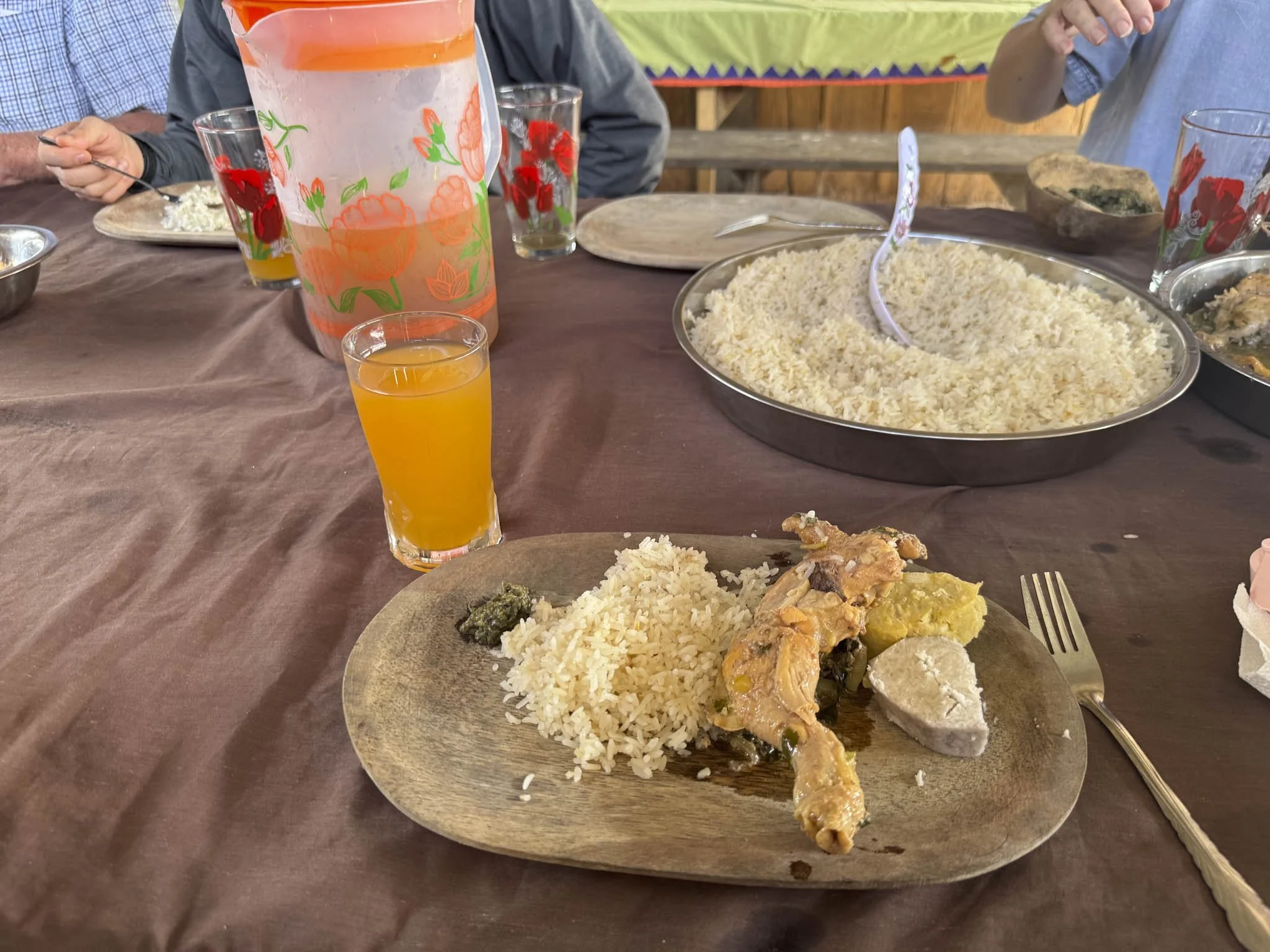
After trudging though the mud to the top of a hill, we headed back to town the way we came. Mathilde told us that the path takes a circle but they decided they’d rather take that path back than to go around where we would have been knee deep in mud. Upon our return, some of the other ladies had a lunch ready for us that was made almost entirely from local ingredients and was cooked over an open fire. We had local chicken, plantains, dashine, shining nettle, chicken and a juice made form local fruit. I think the only thing that was not locally sourced was the rice used in the coconut rice. At the end of the meal we were served some excellent local coffee.
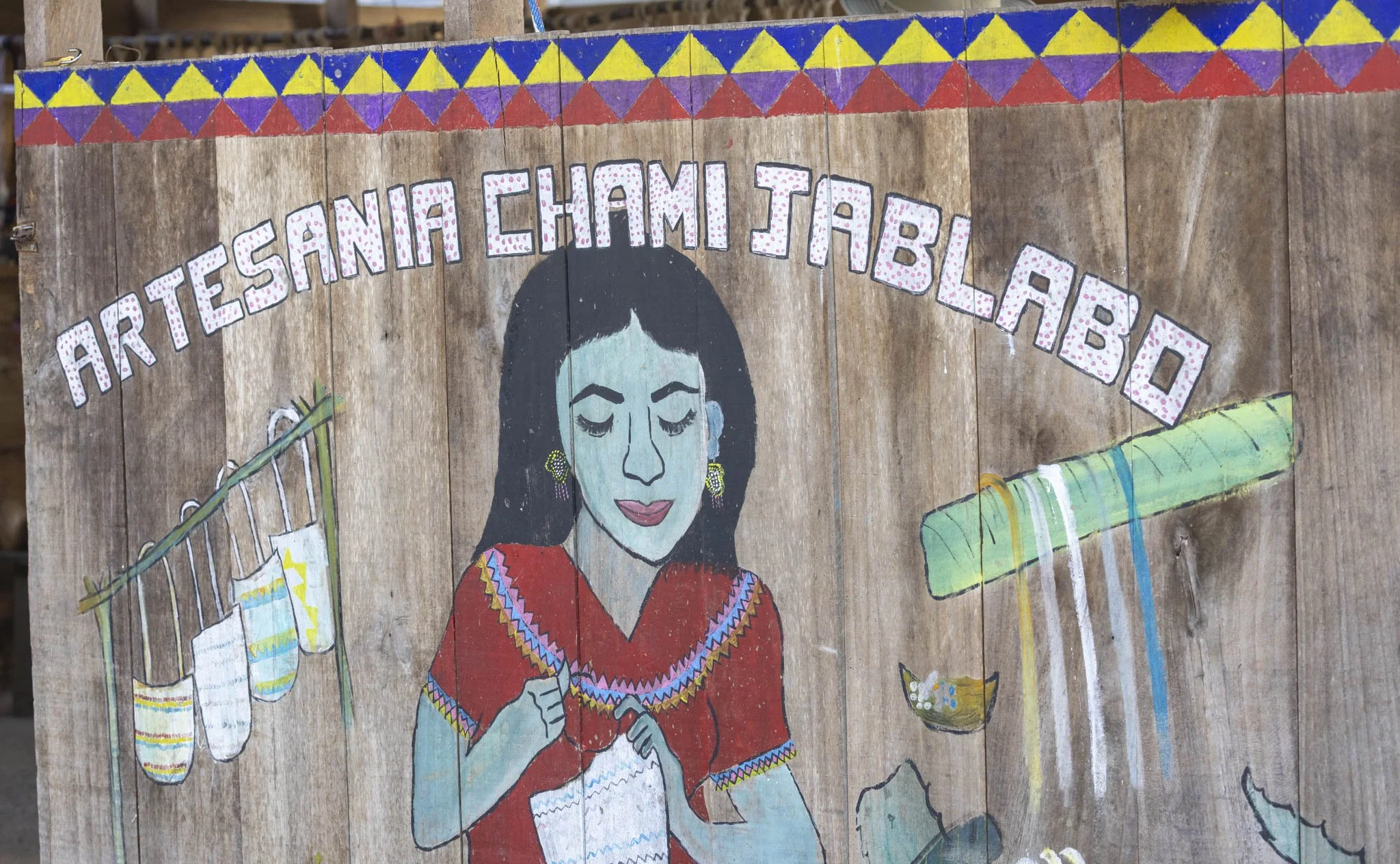
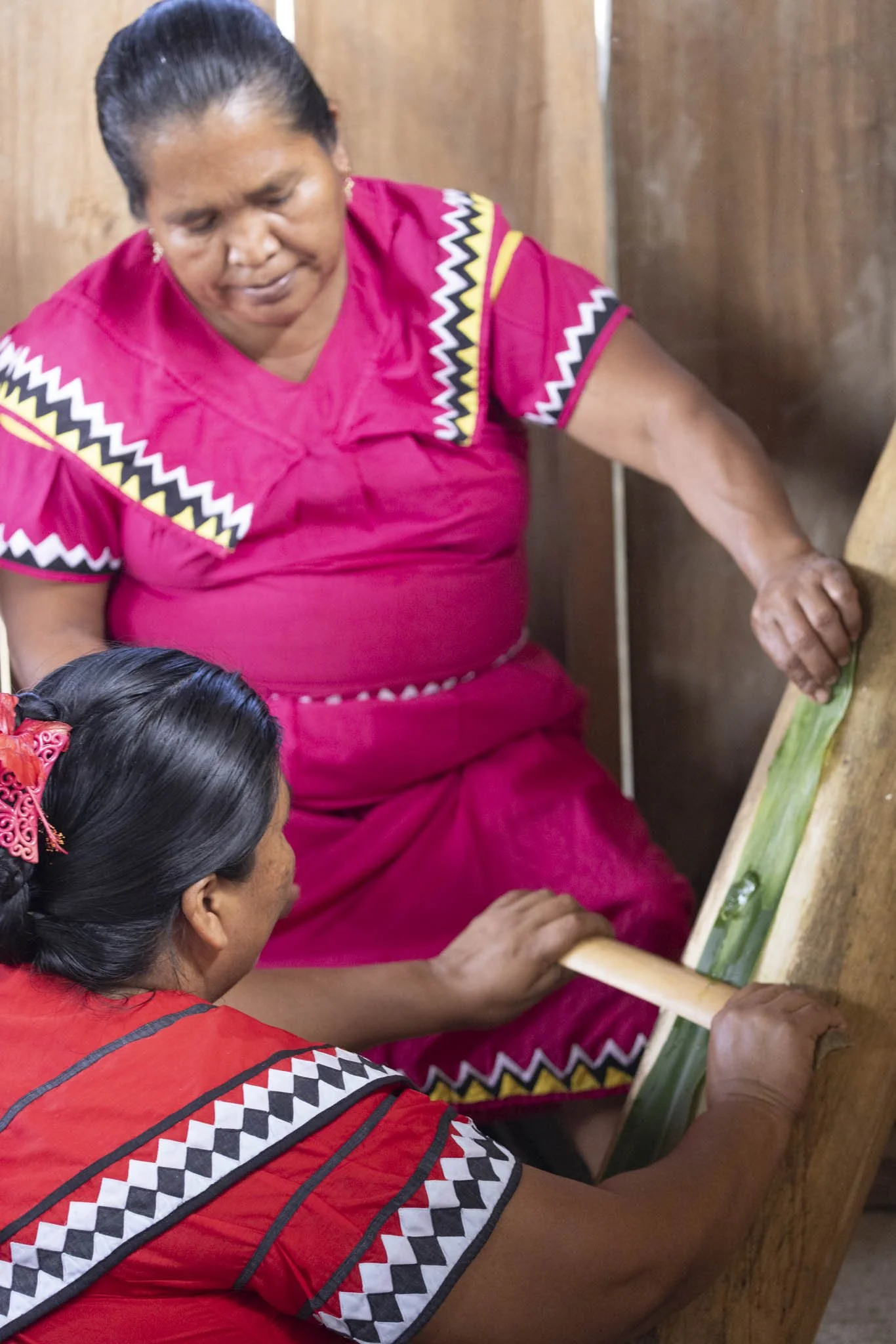
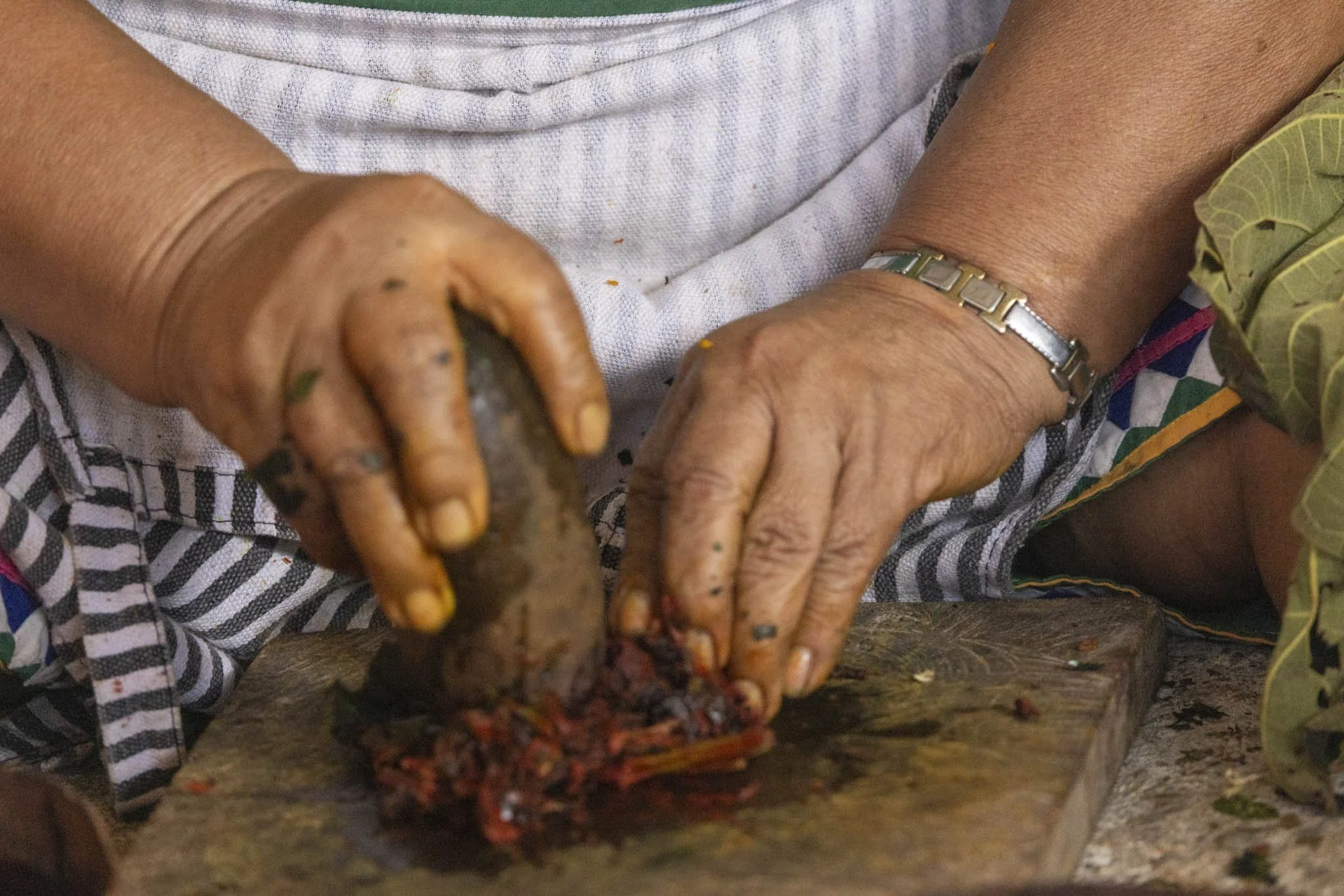
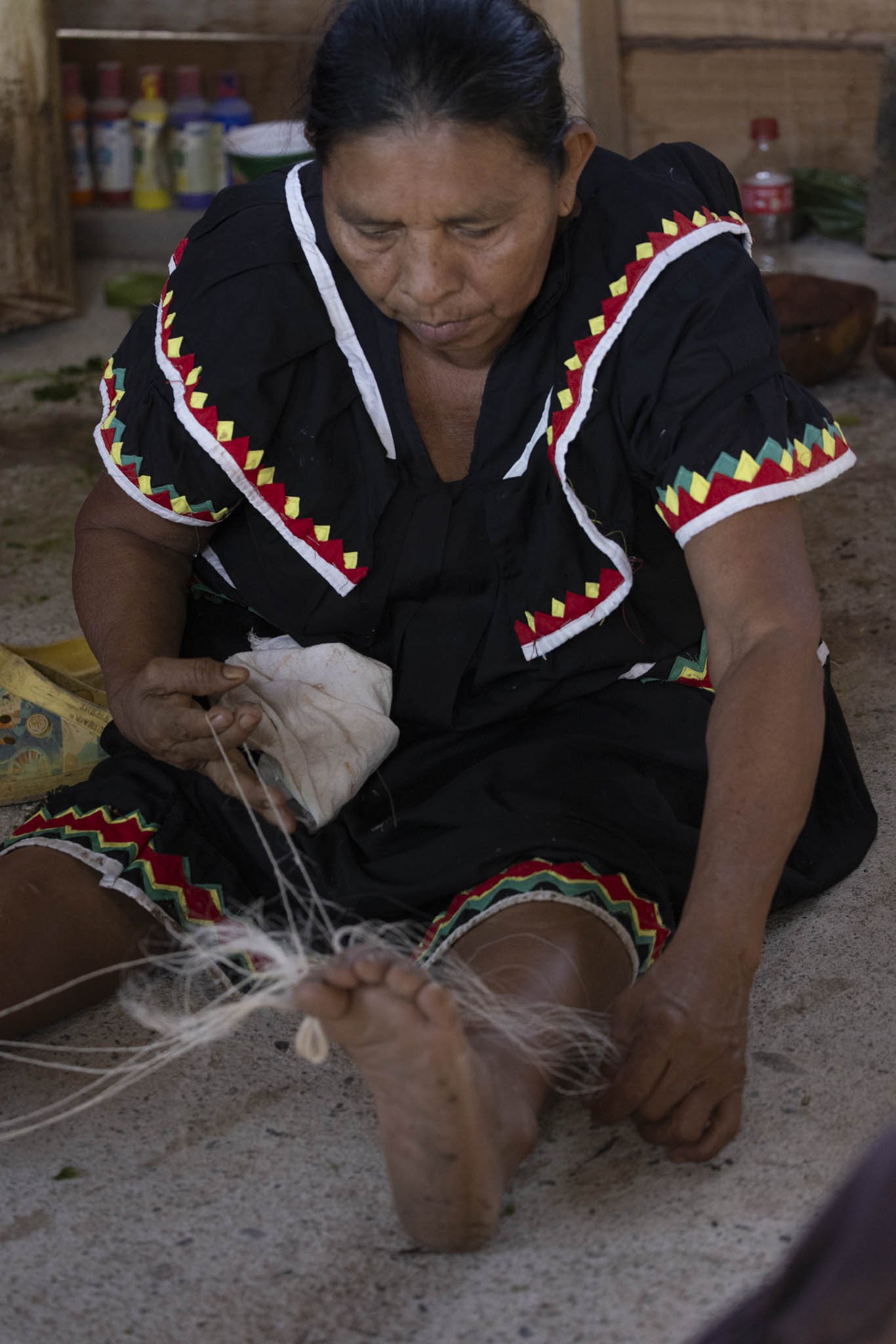
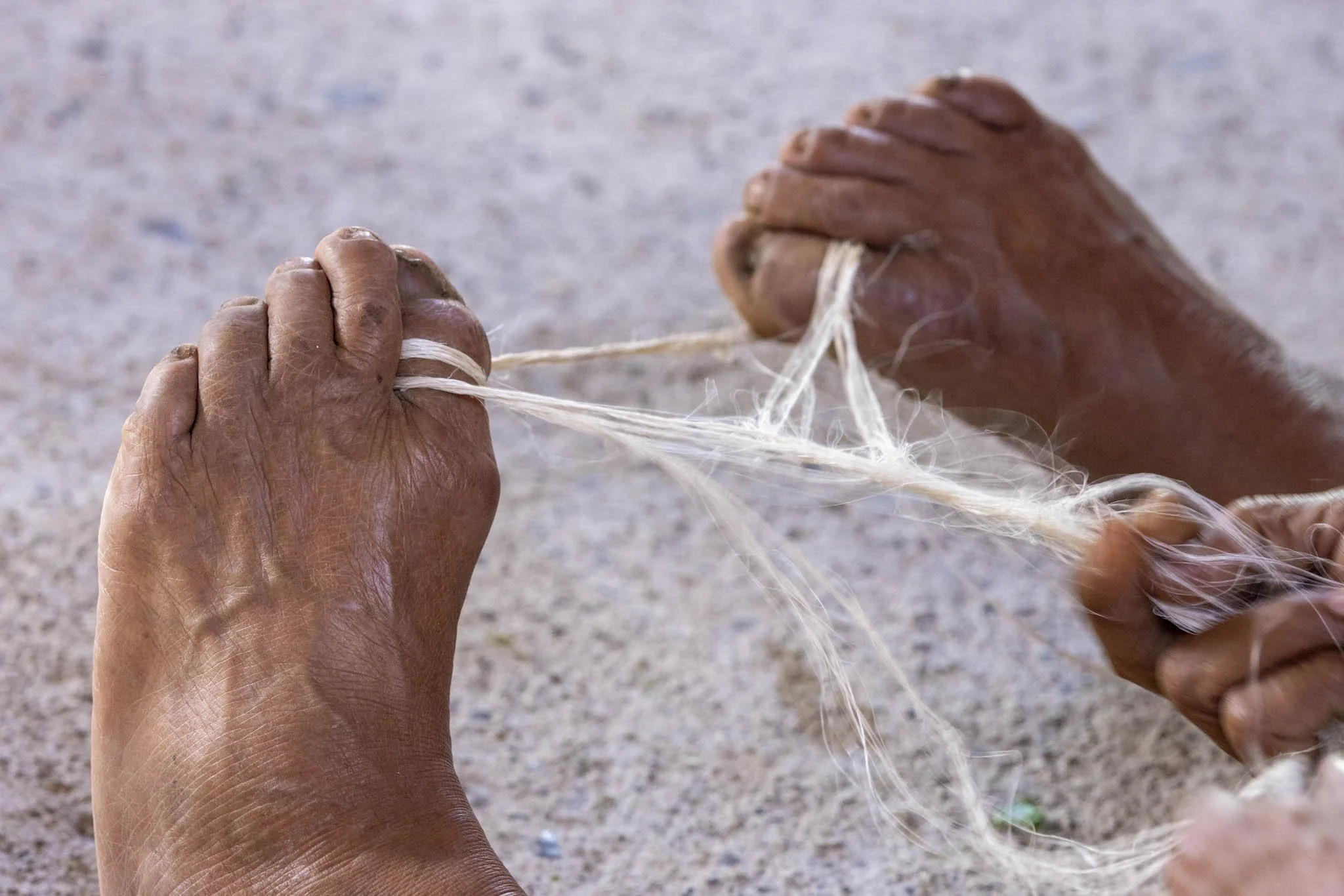
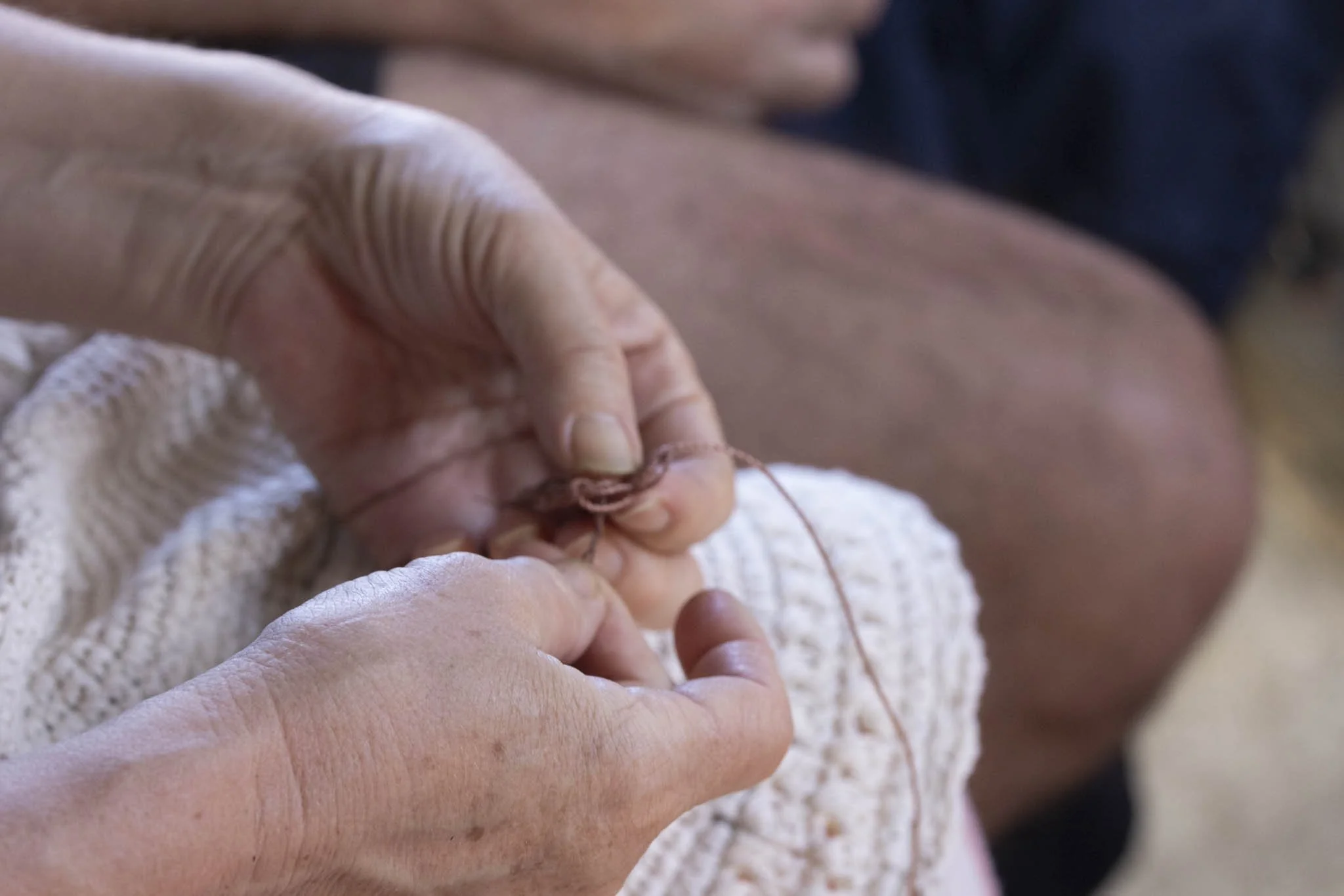
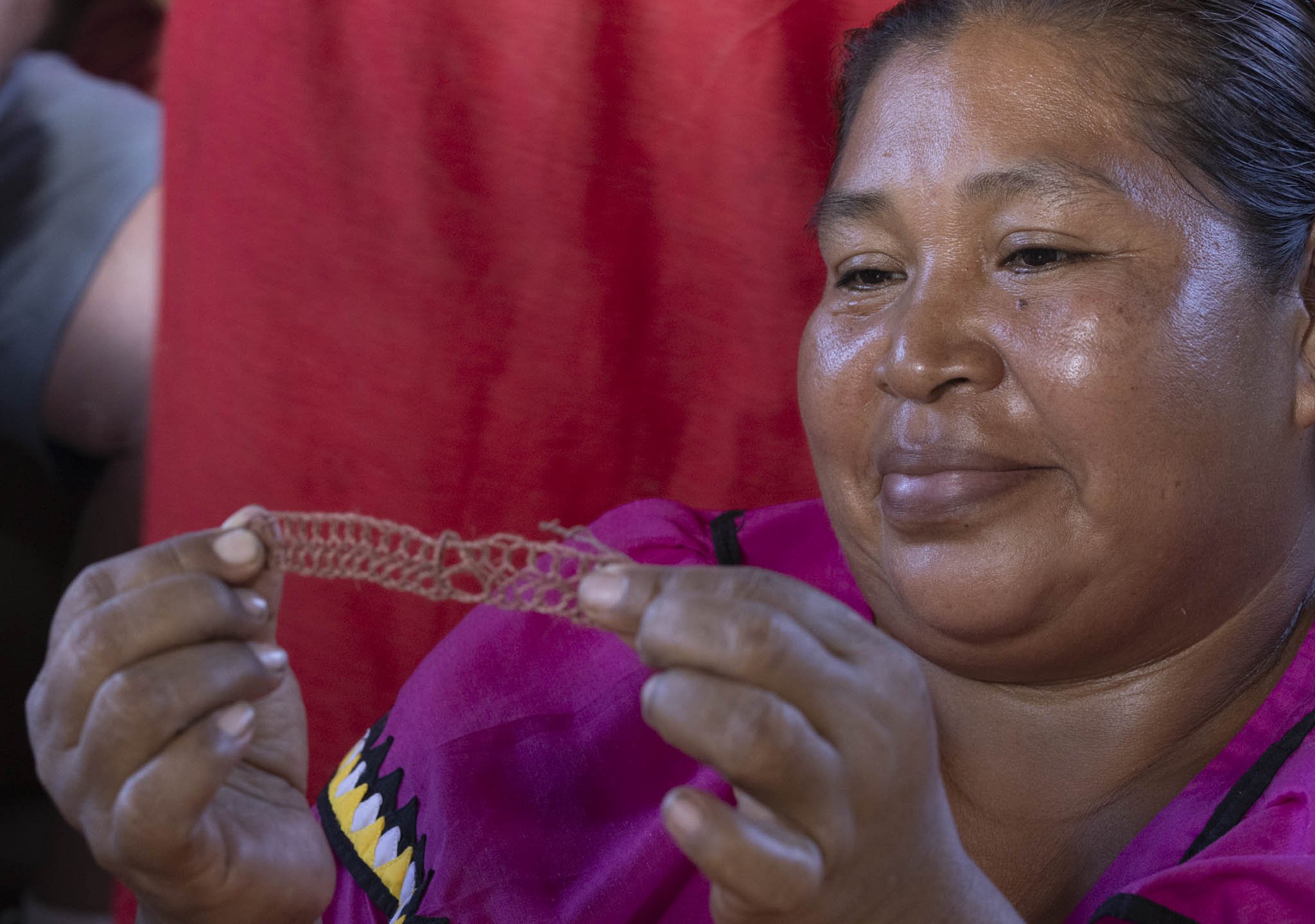
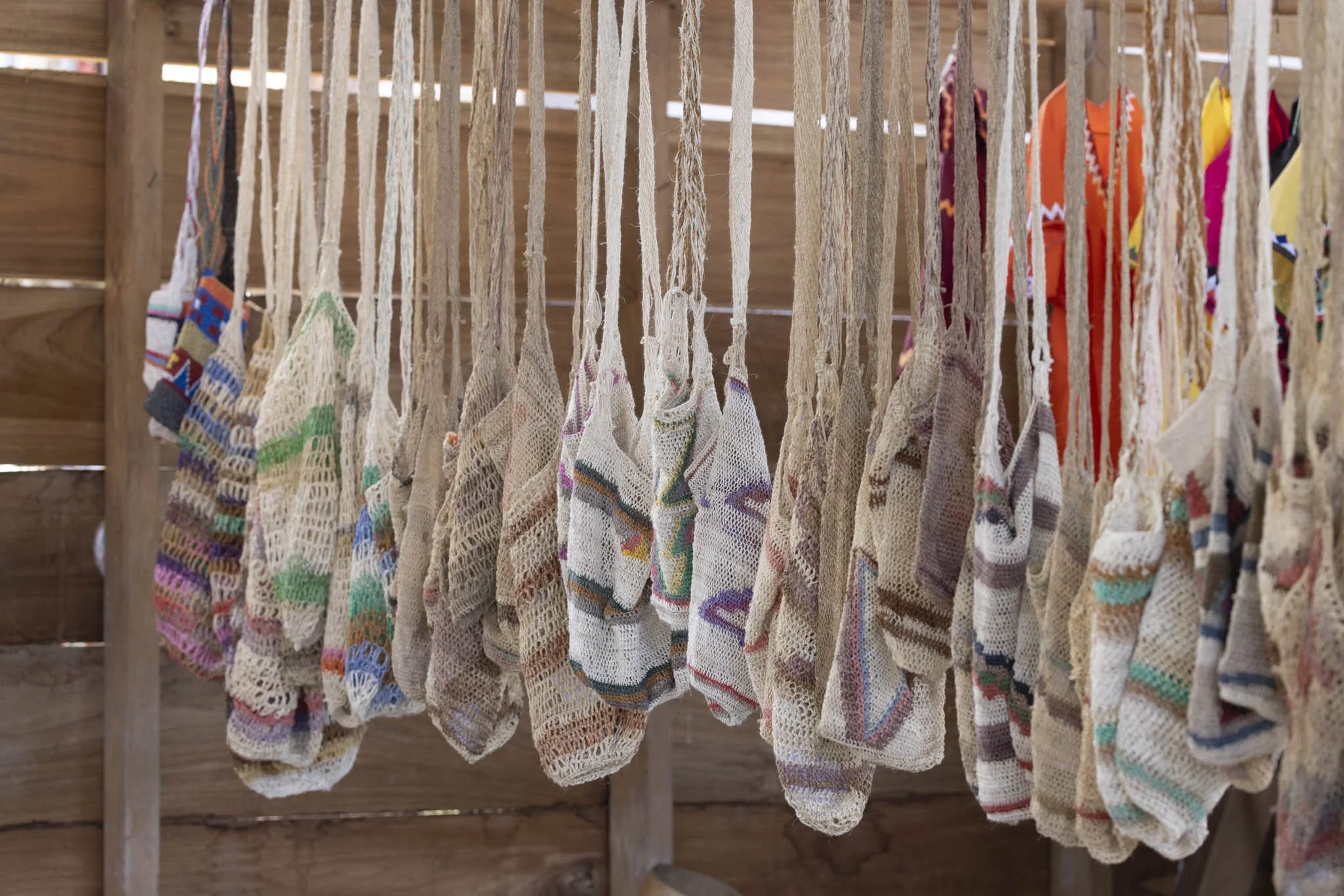
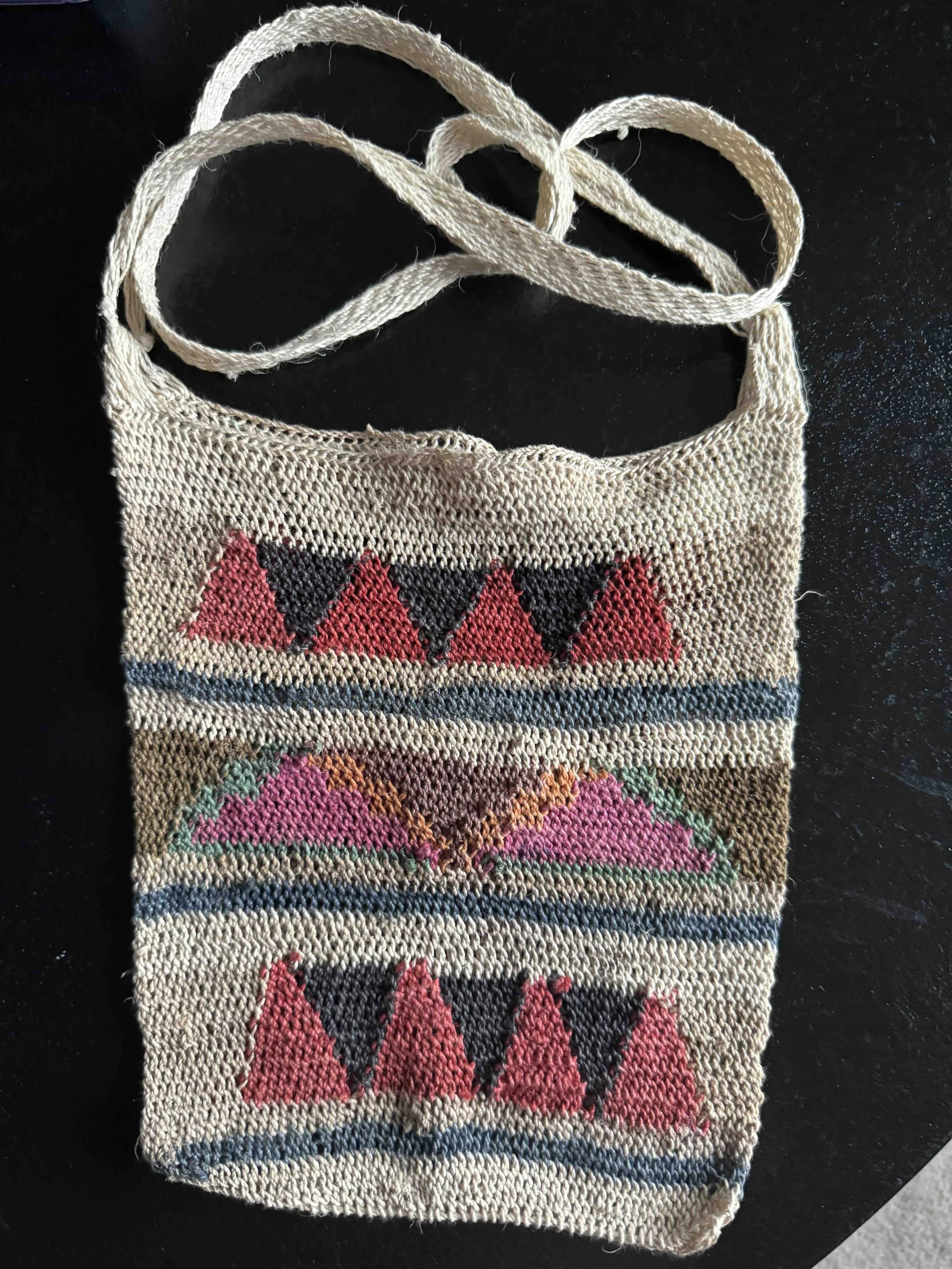
When we finished eating we headed back to the room where we started the tour for a demonstration on how these resourceful women use the local plants to make cord and dyes used in their beautiful bags. The process starts by striping the edges off of the agave leaf and removing the outer skin of the leaf, leaving long fibers. The fibers are then air dried for 5 days before being dyed. The dyes are made from local plants and can produce all of the primary and secondary colors using a painstaking process of crushing the plants and mixing the crushed plant with water. The cord is soaked for a few days and the dyes are then fixed with a plant based fixative. Once the dyed fibers are dry they are rolled into cord by wrapping small bunches of fiber around the worker’s toes and rolling the fibers into cord. The cord is the crafted into bags using a hookless crochet method. The bags can take 3-4 weeks to produce from the time the raw materials are harvested. There were a number of the handmade bags available for purchase and one just caught my eye so I had to purchase it, especially knowing that 100% of what I paid is going to these wonderful women. The one I purchased is in the last picture below.
After our purchases were complete it was time to head back to Boca Town to catch one of the last tender boats back to the ship. Despite the many challenges and extreme poverty on this island, this was one of the most uplifting and joyful experiences we have had. I would highly recommend this to anyone interested in getting totally immersed in a local culture.
All of the Ngabe women who work on this project in their town were phenomenal as was our guide Mathilda Grand. Mathilda is a biochemist from Lyon France and has been working with the Ngabe people and other local tribes for over 20 years studying the plants and their importance in the lives of the native people and helping them to learn to use them to better themselves. She is part of a foundation to help the indigenous people who live in the Bocas Del Toro archipelago raising funds for potable water systems, healthcare and sustainable farming. See more on her work with the Darklands Foundation - https://thebocasbreeze.com/uncategorized/for-the-love-of-water/
When we returned to the ship we decided to have a quiet evening. Tomorrow we arrive at the Panama Canal around 6:30 AM.